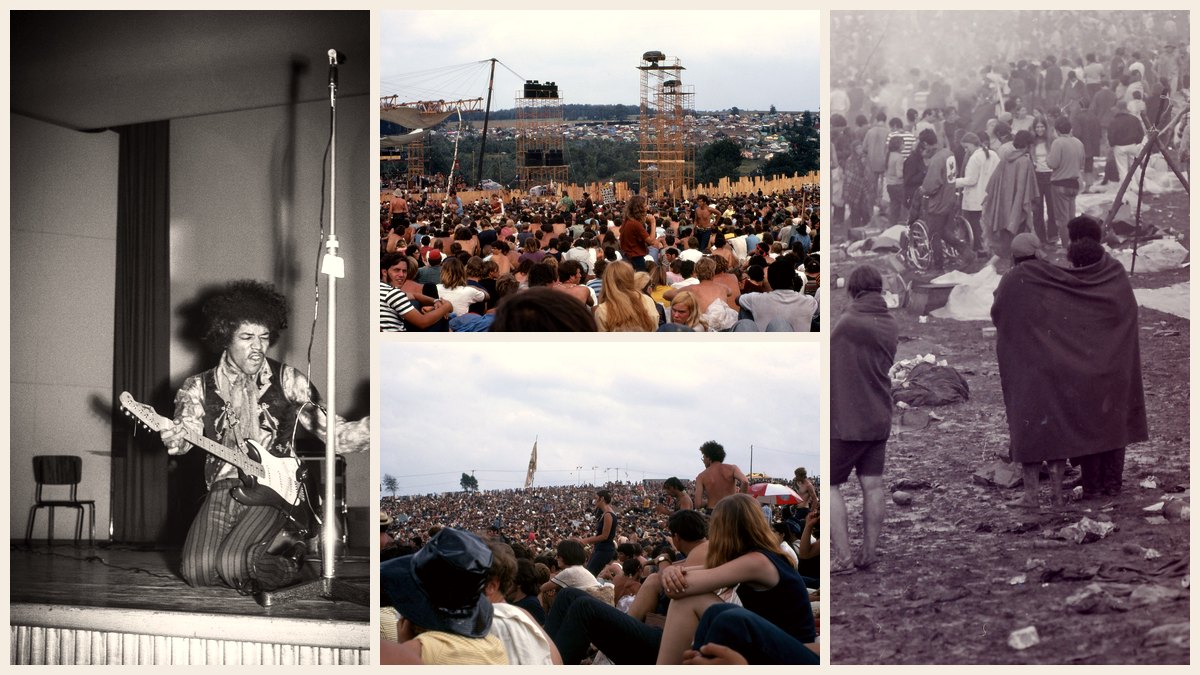
If you were young in 1969, there’s a good chance you didn’t actually see it happen. Most of the crowd had already gone home. It was a gray Monday morning on Max Yasgur’s dairy farm in Bethel, New York, the field was a sea of mud and trash, and the Woodstock Music and Art Fair was supposed to have ended hours earlier. Then Jimi Hendrix stepped up and played “The Star-Spangled Banner” like nobody had ever played it before.
For most Americans, the moment arrived a year later, on movie screens, in the documentary Woodstock. And it never really left. In this Iconic Performances feature, we look at how that August 18, 1969 performance came about, what Jimi was actually doing with his guitar, why it upset some people and moved so many others, and how to hear it today. The official recording is waiting for you at the end of the article.
A Long Weekend on Max Yasgur’s Farm
Woodstock ran from August 15 to 18, 1969, in Bethel, about 60 miles from the town of Woodstock that gave it its name. Organizers hoped for a big crowd. They got one of the biggest crowds in history, an estimated 400,000 people at its peak. Fences came down, traffic backed up for miles, it rained, and the festival quickly turned into something closer to a small city than a concert.
Hendrix was the headliner. By 1969 he was the world’s highest-paid rock musician, and he was reportedly the best-paid performer at Woodstock, even though he accepted far less than his usual fee. He was supposed to close the show at midnight on Sunday. Instead, with the schedule running hours late, he chose to go on Monday morning and close the festival himself.
A New Band, Barely Rehearsed
This wasn’t the Jimi Hendrix Experience anymore. That trio had broken up in June. For Woodstock, Jimi brought drummer Mitch Mitchell and his old Army friend Billy Cox on bass, plus rhythm guitarist Larry Lee and percussionists Juma Sultan and Jerry Velez. According to Mitchell, the group had rehearsed for less than two weeks and never really clicked. When the stage announcer introduced them as the Experience, Jimi gently corrected him: they were calling themselves “Gypsy Sun and Rainbows.”
By the time the band took the stage, somewhere between 8 and 9 a.m. depending on whose account you read, the crowd had thinned to an estimated 30,000. Hendrix had reportedly been awake for more than three days. He played for about two hours.
The Anthem Like Nobody Had Heard It
Deep into the set, Jimi slid into the melody every American knows by heart. There were no vocals. He played the tune clean and proud at first, and then, at the points where the lyrics describe rockets and bombs, he let the guitar do the describing. Using heavy distortion, feedback, sustain and his tremolo bar, he made the instrument scream, whistle and explode, before returning to the familiar melody. Many listeners also catch a few mournful bars of “Taps” along the way. On the official live album, the whole thing runs a little under four minutes before he roars straight into “Purple Haze.”
It wasn’t the first time he’d played the anthem. Hendrix often included a solo instrumental version in his concerts from 1968 until his death in 1970. But Woodstock was the one that the cameras caught, and the one that history kept.
Protest or Tribute?
In the summer of 1969, the Vietnam War was dividing the country, and many listeners heard those falling-bomb sounds as a statement against it. Others found the whole idea disrespectful. Jimi himself, who had served in the U.S. Army as a paratrooper before his music career took off, refused to see it as an insult. Three weeks later he explained, “We’re all Americans… it was like ‘Go America!’… We play it the way the air is in America today. The air is slightly static, see.”
When asked about people calling his version “unorthodox,” he reportedly answered on television: “I’m American so I played it… Unorthodox? I thought it was beautiful, but there you go.” Maybe that’s the best way to hear it: as a love letter written in a difficult year.
From a Muddy Field to the Movie Screen
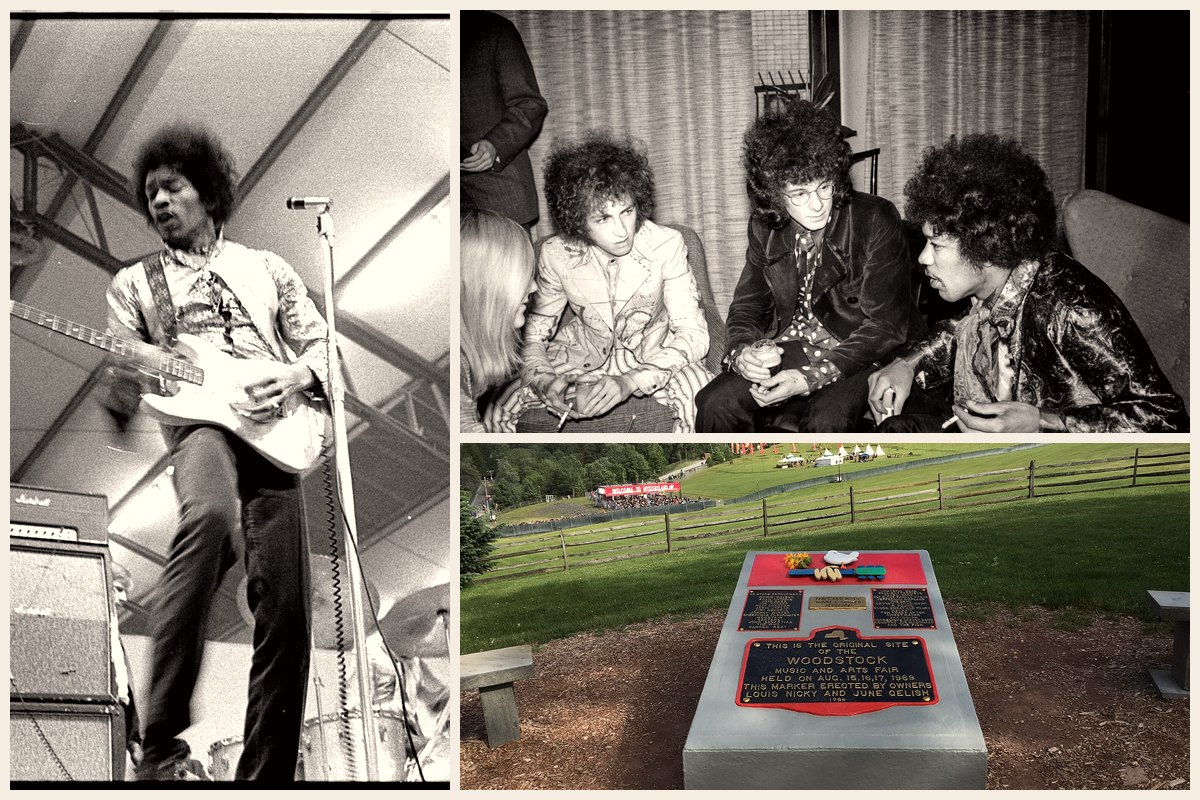
The festival’s promoters nearly went broke on Woodstock, but they owned the film and recording rights. Michael Wadleigh’s documentary Woodstock opened in March 1970, went on to win the Academy Award, and put Jimi’s anthem in front of millions of people who had never been anywhere near Bethel. Jimi’s anthem, in a phrase often used about it, became “part of the sixties zeitgeist.”
The image stuck too: Jimi in a white fringed leather jacket decorated with blue beads, a red scarf tied around his head, a white Stratocaster in his hands. Pop critic Al Aronowitz of the New York Post called it “the most electrifying moment of Woodstock, and it was probably the single greatest moment of the sixties.”
Sadly, Jimi had only about a year left. He died in London on September 18, 1970, at just 27.
Why It Still Matters
More than half a century later, the performance keeps collecting honors. The Woodstock recording was inducted into the Grammy Hall of Fame in 2009. In 2011, the editors of Guitar World named it the greatest performance of all time. Guitarists still study it, and every artist who takes a personal approach to the anthem walks a road Jimi helped pave. If you’d like to hear how a very different artist made the same song her own, read our story of Whitney Houston’s 1991 Super Bowl anthem.
For those of us who remember the era, though, it’s simpler than awards. Play it, and you’re back in 1969: the war on the evening news, the moon landing just a month earlier, and a young man from Seattle standing in the mud, trying to say something about his country with six strings.
Listening Tips
- Start with the full set. The 1999 album Live at Woodstock, produced by the Hendrix family’s Experience Hendrix company, presents most of the Monday morning show in order. You’ll hear the anthem flow out of “Voodoo Child (Slight Return)” and into “Purple Haze.”
- Watch it, too. The performance is a highlight of the 1970 Woodstock documentary, and a DVD of Hendrix’s set was released in 2005.
- Hear where the fame began. His breakthrough American show was the Monterey Pop Festival in 1967. The live album Live at Monterey is a thrilling companion piece.
- Go back to the studio. Are You Experienced (1967) is the classic starting point, and Electric Ladyland (1968) was his only No. 1 album on the Billboard 200.
- Explore the decade. For more music from those years, browse our 60s Classics section, starting with our story of the Beach Boys’ “Good Vibrations”.
Woodstock Anthem Quick Facts
| Performer | Jimi Hendrix (with Mitch Mitchell, Billy Cox, Larry Lee, Juma Sultan and Jerry Velez) |
| Event | Woodstock Music and Art Fair, Bethel, New York |
| Date | Monday morning, August 18, 1969 |
| Audience at the time | An estimated 30,000 (down from a peak of roughly 400,000) |
| Composer | Francis Scott Key (lyrics); tune by John Stafford Smith |
| Format | Solo electric guitar instrumental, about 3:45 on the official release |
| Seen in | Woodstock (1970), the Academy Award-winning documentary |
| Official album | Live at Woodstock (1999, Experience Hendrix) |
| Honors | Grammy Hall of Fame (2009); named the greatest performance of all time by Guitar World editors (2011) |
Sources
- Jimi Hendrix on Wikipedia (Woodstock section, with its cited sources)
- Live at Woodstock (Jimi Hendrix album) on Wikipedia
- Woodstock on Wikipedia
- “The Star-Spangled Banner” on Wikipedia (Adaptations section)
- Recording Academy: Grammy Hall of Fame
- Official Jimi Hendrix website (Experience Hendrix)
Photo Credits
- Featured image: The Jimi Hendrix Experience at the Culture House, Helsinki, May 1967 by Marjut Valakivi, public domain, via Wikimedia Commons
- Featured image: The crowd at the Woodstock Music and Art Fair, August 17, 1969 by Woodstock Whisperer, CC BY-SA 4.0, via Wikimedia Commons
- Featured image: A sunny Saturday afternoon at Woodstock, August 16, 1969 by James M Shelley, CC BY-SA 4.0, via Wikimedia Commons
- Featured image: Festivalgoers at Woodstock, August 1969 by Mark Goff, public domain, via Wikimedia Commons
- In-article image: Jimi Hendrix at the Hippy Happy fair in Ahoy, Rotterdam, November 10, 1967 by Ary Groeneveld / Rotterdam City Archives, CC0, via Wikimedia Commons
- In-article image: The Jimi Hendrix Experience in Helsinki, May 1967 by Marjut Valakivi, public domain, via Wikimedia Commons
- In-article image: The 1969 Woodstock monument, Bethel, New York by Marc Holstein, CC BY-SA 4.0, via Wikimedia Commons
