Few songs announce themselves as quickly as “Billie Jean.” Before a single word is sung, that dry, snapping drum beat and the prowling bassline tell you exactly what you are listening to. Released by Michael Jackson in January 1983, “Billie Jean” became the defining single of Thriller, the best-selling album of all time, and its music video helped change what MTV, and pop music itself, would look like for the rest of the decade.
In this Behind the Video feature, we look at where the song came from, how its famous light-up sidewalk video was made, the records it broke, and why “Billie Jean” still sounds fresh more than four decades later. The official music video is waiting for you at the end of the article.
▶️ Can’t wait to see that famous light-up sidewalk? Scroll down. The official video is waiting for you at the end of the article.
The Story Behind “Billie Jean”
“Billie Jean” was written by Michael Jackson himself and released by Epic Records on January 2, 1983, as the second single from Thriller (1982), following his duet with Paul McCartney, “The Girl Is Mine.” The song tells the story of a young woman who insists that the narrator is the father of her baby, a claim he flatly denies.
In his 1988 autobiography Moonwalk, Jackson explained that there was never a real Billie Jean. The character was a composite of the groupies who had followed him and his brothers during their years as the Jackson 5, some of whom claimed that one of the brothers had fathered their child. Biographer J. Randy Taraborrelli has also linked the song to disturbing letters Jackson received from an obsessed fan in 1981. Either way, the lyric captures a mood of paranoia and pressure that sits in sharp contrast to the irresistibly danceable groove underneath it.
Inside the Studio with Quincy Jones
The track was produced by Quincy Jones and Michael Jackson and recorded at Westlake Studios in Los Angeles. It was not an easy birth. Jones reportedly wanted to shorten the song’s long introduction, which runs close to half a minute, but Jackson insisted on keeping it because, as he put it, that intro was what made him want to dance. Jones also suggested changing the title, worried listeners would think the song was about tennis star Billie Jean King. Jackson refused, and the title stayed.
The sound of “Billie Jean” owes a lot to engineer Bruce Swedien. Asked by Jones to create a drum sound with real “sonic personality,” Swedien built a special platform for the drum kit so that the beat would be recognizable from the very first notes. He also had Jackson record vocal overdubs through a six-foot cardboard tube. Swedien famously mixed the song 91 times, only for the team to decide that the second mix was the best one.
The band was a who’s who of Los Angeles session talent: Louis Johnson on bass guitar, Leon “Ndugu” Chancler on drums, Greg Phillinganes on keyboards, Tom Scott on lyricon, and string arrangements by Jerry Hey. Musically, the song blends post-disco, R&B, funk and dance-pop, sitting in F-sharp minor at around 117 beats per minute, a tempo that still fills dance floors today.
Making the “Billie Jean” Music Video
The “Billie Jean” short film was directed by British filmmaker Steve Barron and produced by Gowers Fields Flattery. It was the first video made for Thriller, and its concept is pure early-80s magic realism. Jackson walks through a moody, rain-slicked city at night while a trench-coated paparazzo tries, and fails, to capture him on film. Every time the photographer develops a picture, Jackson simply is not there.
The most famous image is the sidewalk: each paving tile lights up the moment Jackson steps on it. He lights up a staircase the same way, brings a burnt-out hotel sign back to life as he passes, spins, and freezes on his toes. A tiger-print cloth he uses to polish his shoe briefly turns into a tiger cub. At the end, the photographer is arrested for spying, and the empty street lights up once more as if retracing Jackson’s steps.
Jackson’s look in the video, a black leather suit with a pink shirt and red bow tie, was copied by fans across the United States. It is one of the reasons the song is also a favorite topic for our Retro Fashion & Style section.
Breaking the MTV Barrier
The video’s biggest impact happened off screen. In early 1983, MTV’s programming was built around rock, and the network initially declined to play “Billie Jean.” CBS Records president Walter Yetnikoff responded by threatening to pull all of the label’s videos and go public about the network’s stance. MTV relented and premiered the video on March 10, 1983.
“Billie Jean” became one of the first videos by a Black artist to air in heavy rotation on MTV, and Thriller went on to sell an additional 10 million copies after the video took off. Together with the other Thriller clips, it helped turn the music video from a promotional extra into an essential part of how pop music was marketed. You can explore more clips from this era in our 80s Hits collection.
Chart Success and Awards
Commercially, “Billie Jean” was a phenomenon. It reached No. 1 on the Billboard Hot 100 on March 5, 1983, and stayed there for seven weeks, becoming Jackson’s biggest solo hit. It also spent nine weeks at No. 1 on Billboard’s Black Singles (R&B) chart. According to Billboard, with the single and Thriller both on top at the same time, Jackson became the first artist to lead the Hot 100, the Billboard 200 and both R&B singles and albums charts simultaneously.
The song topped the charts in the UK, Canada, Australia, France, Ireland, Switzerland and Belgium, and Billboard ranked it the No. 2 song of 1983. At the 1984 Grammy Awards, it earned two of Jackson’s record-setting eight Grammys that night: Best R&B Song and Best Male R&B Vocal Performance. It also won an American Music Award for Favorite Pop/Rock Single.
The success has never really stopped. “Billie Jean” is certified Diamond by the RIAA in the United States, and in May 2026, boosted by the biopic Michael, it climbed to No. 1 on the Billboard Global 200 for the first time, more than 43 years after its release. Billboard noted that it set the record for the longest climb to the top of that chart, reaching No. 1 in its 144th week.
Why “Billie Jean” Still Matters
“Billie Jean” is more than a hit; it is a turning point. Its spare, bass-driven arrangement helped define a sleek new kind of post-soul pop, and its video proved that a Black artist could dominate a platform that had been reluctant to play him. Rolling Stone placed it at No. 44 on its 2021 list of The 500 Greatest Songs of All Time, and the Rock and Roll Hall of Fame included it among the 500 Songs That Shaped Rock and Roll.
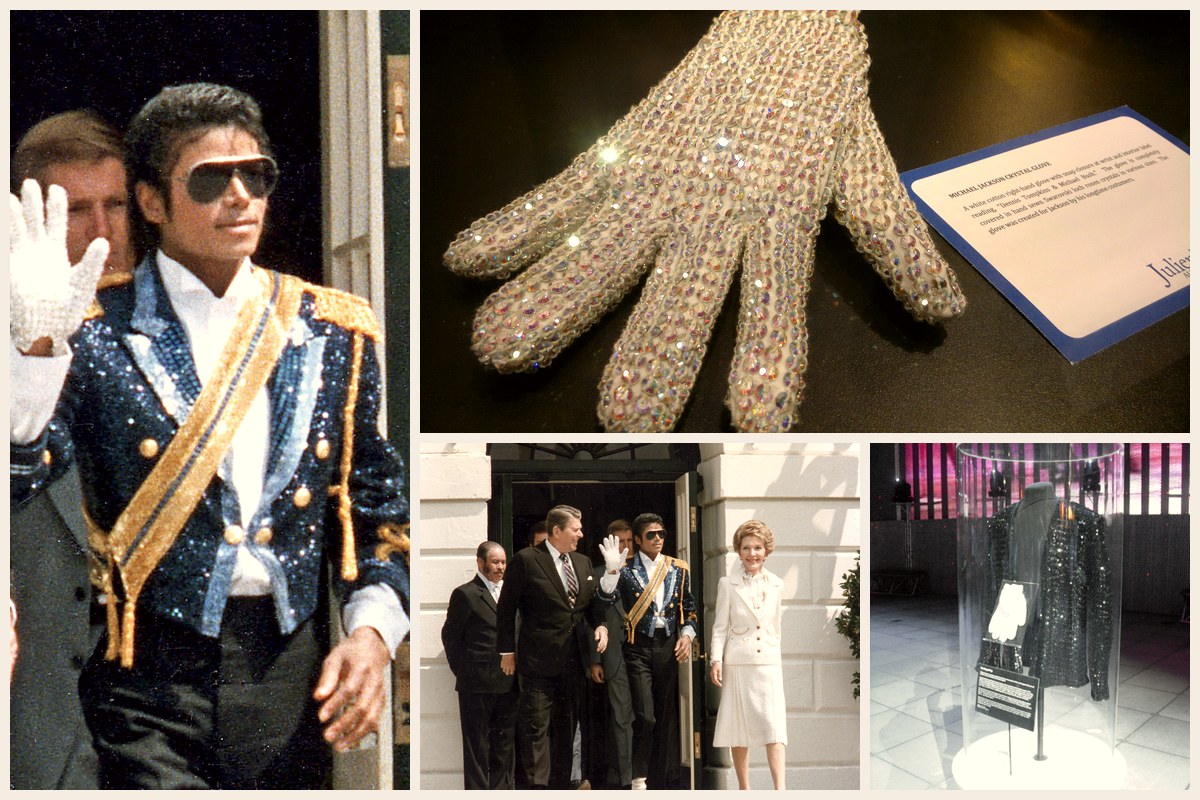
The song is also tied to one of the most celebrated TV moments in music history. On the Motown 25: Yesterday, Today, Forever special, broadcast on May 15, 1983, Jackson performed “Billie Jean” and introduced the moonwalk to the public, along with his single rhinestone glove and black sequined jacket. That performance, watched by an estimated 50 million people, earned him an Emmy nomination and deserves its own place in our Iconic Performances series.
Online, the video keeps finding new fans. On June 10, 2021, “Billie Jean” became the first 1980s clip by a solo artist to pass 1 billion views on YouTube.
Fun Facts About “Billie Jean”
- Jackson said he was so absorbed in the melody while driving that he did not notice his car had caught fire until a passing motorcyclist warned him.
- Bassist Louis Johnson tried his part on every bass guitar he owned before Jackson settled on the sound of a Yamaha bass.
- Jackson’s lead vocal was recorded in a single take.
- The “Billie Jean” short film was inducted into the Music Video Producers Hall of Fame in 1992.
- Daryl Hall of Hall & Oates said Jackson told him he had borrowed the groove from their 1981 hit “I Can’t Go for That (No Can Do).” Hall was happy about it.
- A reworked version of the song became the jingle for Pepsi’s “The Choice of a New Generation” campaign in 1984.
“Billie Jean” Quick Facts
| Artist | Michael Jackson |
| Album | Thriller (1982) |
| Single release | January 2, 1983 (Epic Records) |
| Written by | Michael Jackson |
| Produced by | Quincy Jones and Michael Jackson |
| Genre | Post-disco, R&B, funk, dance-pop |
| Video director | Steve Barron |
| MTV premiere | March 10, 1983 |
| Billboard Hot 100 peak | No. 1 for seven weeks (1983) |
| Grammy Awards | Best R&B Song, Best Male R&B Vocal Performance (1984) |
| RIAA certification | Diamond |
Sources
- “Billie Jean” on Wikipedia (with its cited sources, including Blender, Rolling Stone and Jackson’s autobiography Moonwalk)
- Billboard: “Billie Jean” Thrills at No. 1 on Billboard Global 200
- Billboard: Songs That Topped the Global 200 a Decade After Their Release
- RIAA Gold & Platinum database: Michael Jackson, “Billie Jean”
Photo Credits
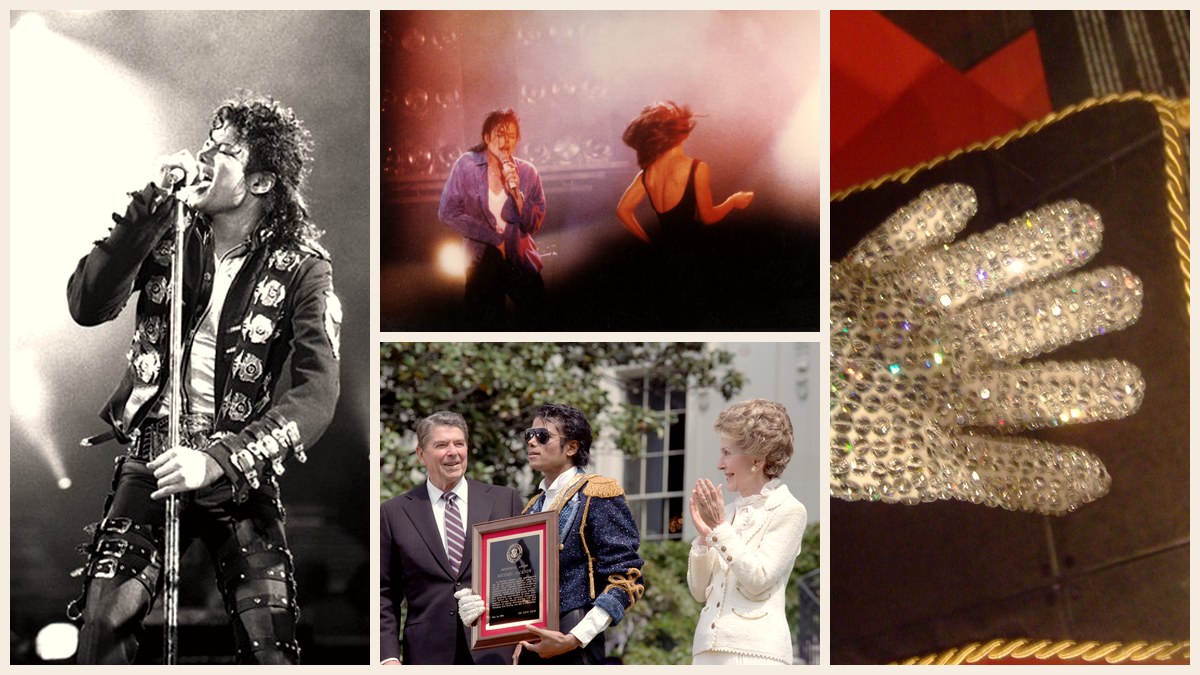
- Featured image: Michael Jackson performing in Vienna, 1988 by Zoran Veselinovic, CC BY-SA 2.0, via Wikimedia Commons
- Featured image: Michael Jackson live on the Dangerous Tour, Monza, 1992 by Daniele Dalledonne, CC BY-SA 2.0, via Wikimedia Commons
- Featured image: Michael Jackson receives the Presidential Public Safety Commendation, 1984 by Ronald Reagan Presidential Library, public domain, via Wikimedia Commons
- Featured image: Michael Jackson’s glove, Experience Music Project, Seattle by John Seb Barber, CC BY 2.0, via Wikimedia Commons
- In-article image: Michael Jackson at the White House, 1984 by White House Photo Office, public domain, via Wikimedia Commons
- In-article image: Michael Jackson’s crystal glove, wardrobe exhibition by Abi Skipp, CC BY 2.0, via Wikimedia Commons
- In-article image: Michael Jackson with Ronald and Nancy Reagan, 1984 by White House Photo Office, public domain, via Wikimedia Commons
- In-article image: Michael Jackson’s glove and jacket on display by savemejebus, CC BY-SA 2.0, via Wikimedia Commons