
It starts with a guitar. A quick, nervous finger-picked pattern that sounds like a heartbeat speeding up. Then comes that name, sung four times in a row, almost like a prayer. If you grew up with country radio in the 1970s, you knew “Jolene” from the first two seconds, and chances are you still do.
Dolly Parton wrote and recorded the song in 1973, and it became one of the most loved country records ever made. In this Country feature, we look at the real story behind “Jolene,” what was happening in Dolly’s life when she wrote it, the warm 1978 TV performance waiting for you at the end of this article, and the best versions to enjoy today.
▶️ Want to hear Dolly first? Scroll down. The performance clip is at the end of the article.
Who Was the Real Jolene?
“Jolene” is sung by a woman who begs a beautiful rival, with auburn hair and emerald eyes, not to take her man “just because you can.” It is a song about insecurity, not anger, and that is what makes it so unusual. The narrator never threatens Jolene. She simply admits she cannot compete.
Dolly said the story came from her own life. On stage in 1988, she told an audience that “Jolene” was based on a true story, which was why she did not like to sing it too often. Early in her marriage, a red-headed bank clerk used to flirt with her husband, Carl Dean, at his local bank branch. Dolly joked about it for years, but the feeling behind it was real.
The name came from somewhere else. Dolly explained that a little girl with red hair, green eyes and fair skin came on stage to ask for her autograph, and her name was Jolene. Dolly loved it so much that she kept repeating it so she would not forget, and that repetition became the chorus. Some fans believe the girl may have been Juline Whelan, a Canadian who reportedly met Dolly at age 10 in 1972, though that has never been confirmed.
Nashville, 1973: Recording a Classic
“Jolene” was produced by Bob Ferguson for RCA, and its sound rests on two guitarists. Chip Young played the famous thumb-picked part, a pattern he had picked up from Joe South, while Wayne Moss added a second steel-string guitar that enters on the second chorus. Listen with headphones and you can hear the two parts weaving together.
Dolly later told radio host Bobby Bones that she wrote “Jolene” on the same day as “I Will Always Love You.” In another interview she softened that a little, saying the two songs were written “pretty close at the same time.” Either way, it is hard to imagine a better writing week in country music history.
A Turning Point in Dolly’s Life
In 1974, Dolly was at a crossroads. Since 1967 she had been the girl singer on The Porter Wagoner Show, the syndicated TV program that made her a familiar face in living rooms across America. Their duets were reliable hits, but Dolly had always pictured a solo career.
The Jolene album came out on February 4, 1974, on RCA Victor, and the timing says a lot. That same month, “Jolene” climbed to No. 1 on the Billboard country chart, her second solo country chart-topper, and it also gave her a first appearance on the Billboard Hot 100. By mid-1974 she had stopped appearing on Porter’s show. The album also contains “I Will Always Love You,” the goodbye song she wrote about leaving him.
The Performance: The Midnight Special, 1978
Like most country singles of its day, “Jolene” never had a music video. What we have instead are wonderful TV performances, and our favorite comes from The Midnight Special, NBC’s late-night music show that ran from 1972 to 1981. Created by Burt Sugarman, it aired after Johnny Carson’s Friday Tonight Show, with Wolfman Jack as its announcer, and its acts played live.
According to the show’s official YouTube channel, Dolly performed “Jolene” on the episode broadcast September 29, 1978. By then she was a crossover star thanks to “Here You Come Again,” which she sang on the same show. In the clip she stands front and center in a shimmering white gown with flowing sleeves, her band behind her, smiling and waving to the audience, and somehow making a song about heartbreak feel like a warm conversation with old friends.
That is the magic of seeing Dolly sing it rather than just hearing it. The lyric is desperate, but she delivers it with such ease and good humor that you feel she has already made peace with Jolene. If you enjoy vintage TV moments like this, our Iconic Performances section is full of them.
Charts, Honors and a Song That Kept Growing
“Jolene” was nominated for the Grammy for Best Female Country Vocal Performance twice, in 1975 for the original recording and in 1976 for a live version from the TV series In Concert. It did not win either time, but its reputation has only grown. In the UK, it reached No. 7 in 1976, her first chart hit there.
Rolling Stone ranked it No. 63 on its 2021 list of the 500 Greatest Songs of All Time, and in 2024 placed it at No. 1 on its list of the 200 Greatest Country Songs of All Time. Dolly said “Jolene” was her most frequently covered song. Olivia Newton-John, the White Stripes, Miley Cyrus and many others have recorded it, a 2016 Pentatonix version featuring Dolly won a Grammy, and Beyoncé’s reworked 2024 version reached No. 7 on the Billboard Hot 100. Dolly herself sang “Jolene” at her Rock and Roll Hall of Fame induction in 2022.
Remembering Dolly
Dolly Parton died on August 25, 2026, at the age of 80. In the weeks that followed, fans everywhere returned to her music, and “Jolene” led the way. Its Spotify streams rose by 630 percent worldwide, and in the UK it climbed to No. 6, a new peak for the song half a century after its release. It was reportedly the first song from the 1970s to pass one billion streams on Spotify.
Her story is still being told. A Welsh-language version of “Jolene,” with Welsh singer Bronwen Lewis, Dolly’s niece Jada Star and Dolly herself singing some lines in Welsh, was released on October 9, 2026. The Country Music Association’s tribute special, I Will Always Love You: A Celebration of Dolly Parton, was scheduled to air live on ABC and Disney+ on October 21, 2026.
A Listening Guide for Today
- Start with the album: Jolene (1974), which gives you both “Jolene” and the original “I Will Always Love You.”
- Compare the versions: the 1973 studio recording, the 1978 Midnight Special performance below, the White Stripes’ live version and the Pentatonix recording with Dolly.
- Go back further: “Coat of Many Colors” (1971), her tender story song about growing up poor in the Smoky Mountains.
- Go forward: “Here You Come Again” (1977), “9 to 5” (1980) and “Islands in the Stream” (1983), her famous duet with Kenny Rogers.
- More from the decade: browse our 70s Gold collection for other classics from the same years.
Fun Facts About “Jolene”
- The chorus repeats the name four times because Dolly kept singing it to herself so she would not forget it.
- During New Zealand’s COVID-19 lockdown, a newspaper suggested washing your hands for as long as it takes to sing the chorus of “Jolene.”
- Dolly called Mindy Smith’s 2003 cover her favorite version of the song.
- Several answer songs tell the story from Jolene’s side, including Cam’s “Diane” (2017).
- In 2021 Dolly sang her own parody, changing the words to “Vaccine,” when she got her COVID-19 shot.
“Jolene” Quick Facts
| Artist | Dolly Parton |
| Album | Jolene (RCA Victor, February 4, 1974) |
| Written by | Dolly Parton |
| Produced by | Bob Ferguson |
| Guitars | Chip Young and Wayne Moss |
| Billboard country peak | No. 1 (February 1974) |
| UK peak | No. 7 (1976); No. 6 (2026) |
| Grammy nominations | Best Female Country Vocal Performance (1975, 1976) |
| Featured performance | The Midnight Special, NBC, September 29, 1978 |
| Rolling Stone ranking | No. 1 of the 200 Greatest Country Songs (2024) |
Sources
- “Jolene (song)” on Wikipedia (with its cited sources, including Rolling Stone, NPR and the Official Charts Company)
- Jolene (album) on Wikipedia
- Dolly Parton on Wikipedia (career and Porter Wagoner years)
- The Midnight Special (TV series) on Wikipedia
- BBC News: Dolly Parton sings Jolene in Welsh in recording released after her death
- CMA: Two-hour live television tribute to Dolly Parton
- The Midnight Special official YouTube channel: Dolly Parton, “Jolene” (September 29, 1978)
Photo Credits
- Featured image: Dolly Parton at the Kahala Hilton Hotel, Honolulu, 1983 by Alan Light, CC BY 2.0, via Wikimedia Commons
- Featured image: Dolly Parton performing at the Cordell Hull Dam dedication, Carthage, Tennessee, October 13, 1973 by U.S. Army Corps of Engineers Nashville District, CC BY-SA 2.0, via Wikimedia Commons
- Featured image: Dolly Parton and her band at the Library of Congress, 2004 by John Harrington / Library of Congress, public domain, via Wikimedia Commons
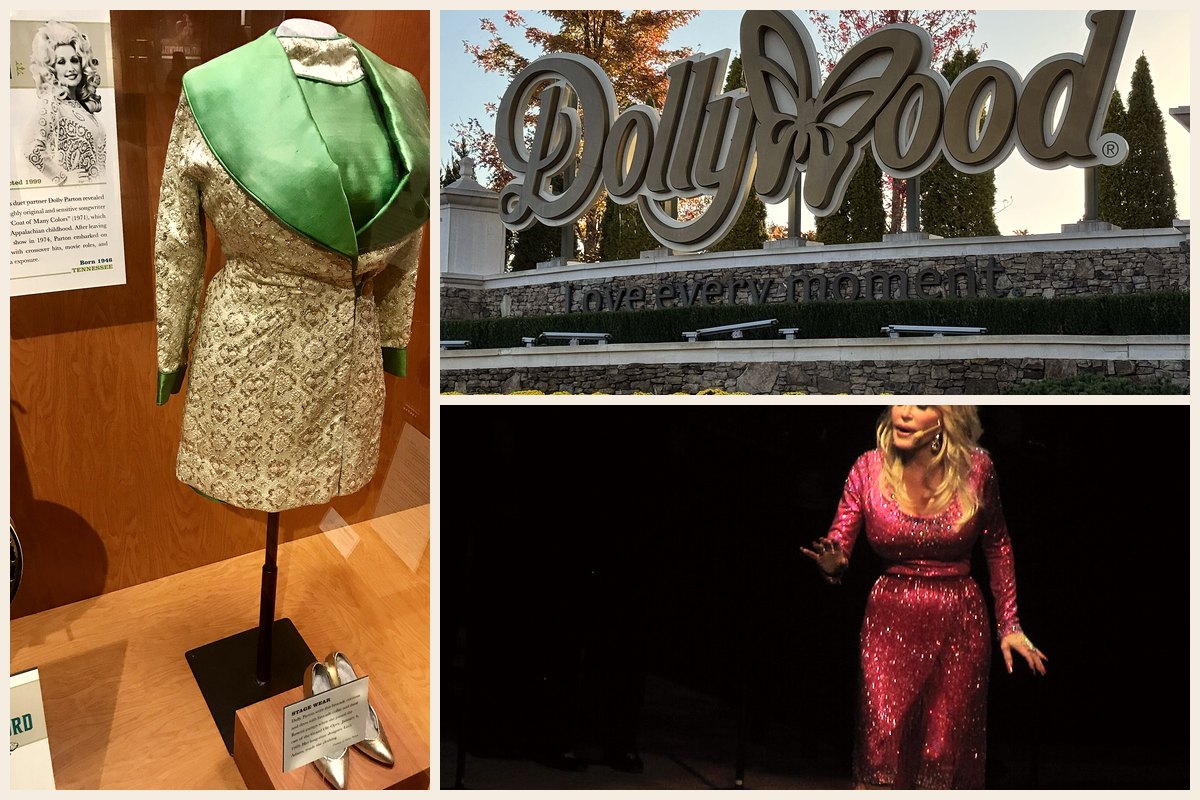
- In-article image: Dolly Parton’s 1969 Grand Ole Opry stage wear, Country Music Hall of Fame and Museum by e Kat, CC0, via Wikimedia Commons
- In-article image: The Dollywood sign, Pigeon Forge, Tennessee, 2023 by Sarah Stierch (Missvain), CC BY 4.0, via Wikimedia Commons
- In-article image: Dolly Parton in concert, 2011 by lacafferata, CC BY 2.0, via Wikimedia Commons