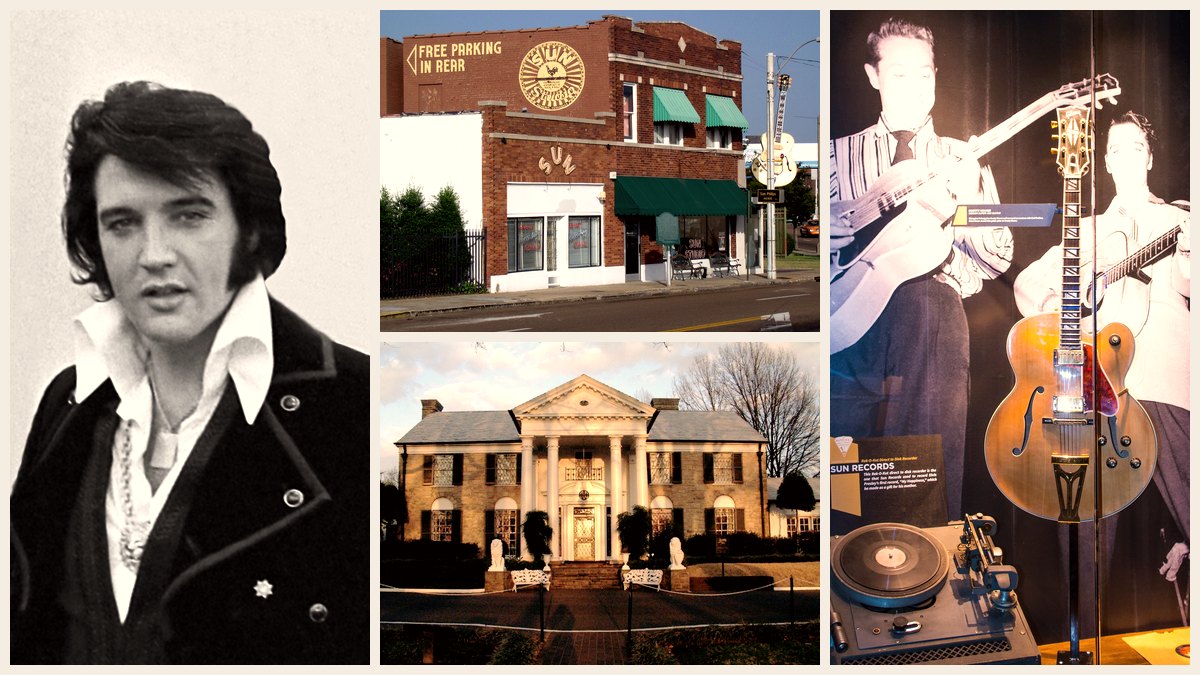
Some songs knock politely. “Jailhouse Rock” kicks the cell door open. From the first two crashing hits of Scotty Moore’s guitar and D.J. Fontana’s drums, it sounds like a party that the guards have already lost control of. Released in the fall of 1957, it caught Elvis Presley at the absolute peak of his first wave of fame, and it gave American movie audiences a scene they never forgot.
If you grew up with this record, or with parents who played it until the grooves wore thin, this one is for you. In our 50s Rock & Roll series, we look at how the song came together, the famous dance number from the film, what was going on in Elvis’s life that year, and the best ways to enjoy it today.
▶️ Want to watch first? Scroll down. The official performance clip is waiting at the end of the article.
A Song Written in an Afternoon
“Jailhouse Rock” was written by Jerry Leiber and Mike Stoller, the young New York songwriting team who had already given Elvis “Hound Dog.” MGM had hired them to write songs for Presley’s new picture, but months went by without a note arriving at the studio.
The story goes that in April 1957, Jean Aberbach of the music publisher Hill & Range reportedly lost patience, locked them in their New York hotel room and refused to let them out until the songs were written. About four hours later, they reportedly had “Jailhouse Rock,” “Treat Me Nice,” “I Want to Be Free” and “(You’re So Square) Baby I Don’t Care.”
The lyrics are pure Leiber and Stoller fun: a prison dance with a saxophone player, a drummer, a “Purple Gang” rhythm section and a sad sack sitting alone in the corner. Some of the names were real. Shifty Henry was a well-known Los Angeles musician, not a convict, and the Purple Gang was a real Detroit mob. Rolling Stone later noted that the writers meant it as a tongue-in-cheek goof. Elvis sang it dead straight, as hard-driving rock and roll, and that is exactly why it works.
In the Studio with the Blue Moon Boys
Elvis recorded the song at Radio Recorders in Hollywood on April 30, 1957, with his regular band: Scotty Moore on lead guitar, Bill Black on bass and D.J. Fontana on drums, plus the Jordanaires on backing vocals and Dudley Brooks on piano. Leiber and Stoller were invited to the session, where they met Elvis for the first time. He liked them so much that he convinced MGM to cast Mike Stoller as the piano player in the movie’s band.
Listen closely to the moment just before Scotty Moore’s solo. Elvis lets out a cry so intense that, as Rolling Stone put it, the take almost falls apart. It never does.
Elvis in 1957: The Year Everything Happened at Once
It is hard to overstate how big Elvis was that year. In January 1957 he made his third and final appearance on The Ed Sullivan Show, the one where cameras famously showed him only from the waist up. In March he bought Graceland, the Memphis mansion that would be his home for the rest of his life. Then came Hollywood.
Jailhouse Rock was his third film and his first for Metro-Goldwyn-Mayer. He played Vince Everett, a young man who learns the guitar in prison and becomes a star after his release. Many fans have noticed how much the second half of the story echoes Elvis’s own rise, from the first records to the fame that changes a young man from Tupelo.
Just weeks after the film opened, the next chapter arrived. On December 20, 1957, Elvis received his draft notice. By March 1958 he was in the U.S. Army. “Jailhouse Rock” captures the last stretch of that wild first era before he put on a uniform.
The Dance Number That Felt Like a Music Video
For many people, “Jailhouse Rock” is not just a song. It is a picture: Elvis in prison clothes, dancing with his fellow inmates across a stage set built to look like a block of jail cells.
That sequence was the first scene shot for the film, and filming with the new choreography began on May 13, 1957, at MGM in Culver City, California. Choreographer Alex Romero first tried a more traditional routine. Elvis was not comfortable with it, so Romero reportedly asked him to show how he moved on his own and built the number around those moves. Elvis is credited with much of the choreography that ended up on screen.
There were bumps along the way. During filming, one of Elvis’s dental caps reportedly came loose and lodged in his lung, and he spent a night in the hospital before returning to work the next day. The scene was finished, and it has often been called his greatest musical moment on film.
Some music historians even call it a prototype of the modern music video, a full quarter century before MTV made clips like Michael Jackson’s “Billie Jean” video into events.
A Sad Note Behind the Scenes
The film has a heartbreaking footnote. Co-star Judy Tyler, who played Peggy, was killed in a car crash in July 1957, just days after production wrapped. Elvis was reportedly so devastated that he never watched the finished film. Jailhouse Rock opened nationally on November 8, 1957, and in 2004 the Library of Congress added it to the National Film Registry.
Chart Success and Honors
Released by RCA Victor on September 24, 1957, with “Treat Me Nice” on the B-side, “Jailhouse Rock” spent seven weeks at No. 1 on Billboard’s pop chart that fall. It also topped the R&B chart and spent a week at No. 1 on the country chart, a crossover few artists could match. In Britain, it was a No. 1 hit for three weeks early in 1958.
The Jailhouse Rock EP, which collected songs from the film, topped Billboard’s EP chart and sold two million copies, earning a double-platinum RIAA certification.
The honors kept coming for decades:
- Rolling Stone placed it at No. 67 on its list of The 500 Greatest Songs of All Time.
- The Rock and Roll Hall of Fame named it one of the 500 Songs That Shaped Rock and Roll.
- In 2004, it ranked No. 21 on AFI’s 100 Years…100 Songs, the American Film Institute’s list of the greatest songs in American movies.
- In 2016, it was inducted into the Grammy Hall of Fame.
“Jailhouse Rock,” Again: The ’68 Comeback
The official video at the end of this article comes from a different, equally famous moment. After years of making movies and no concerts, Elvis taped a television special for NBC at its studios in Burbank, California, in June 1968. Dressed head to toe in black leather, he tore through his early hits in front of a small studio audience, and “Jailhouse Rock” was one of them.
The special, now known as the ’68 Comeback Special, aired on December 3, 1968. It was the most-watched show of that television season and relaunched his singing career. Watching a 33-year-old Elvis attack a song he first recorded at 22 is a wonderful way to see how much it still meant to him.
Why “Jailhouse Rock” Still Rocks
More than 65 years later, “Jailhouse Rock” still sounds dangerous in the best way. It is short, loud and funny, and it does not waste a second. It also sums up what made Elvis special: he could take a clever novelty lyric and turn it into something raw and exciting.
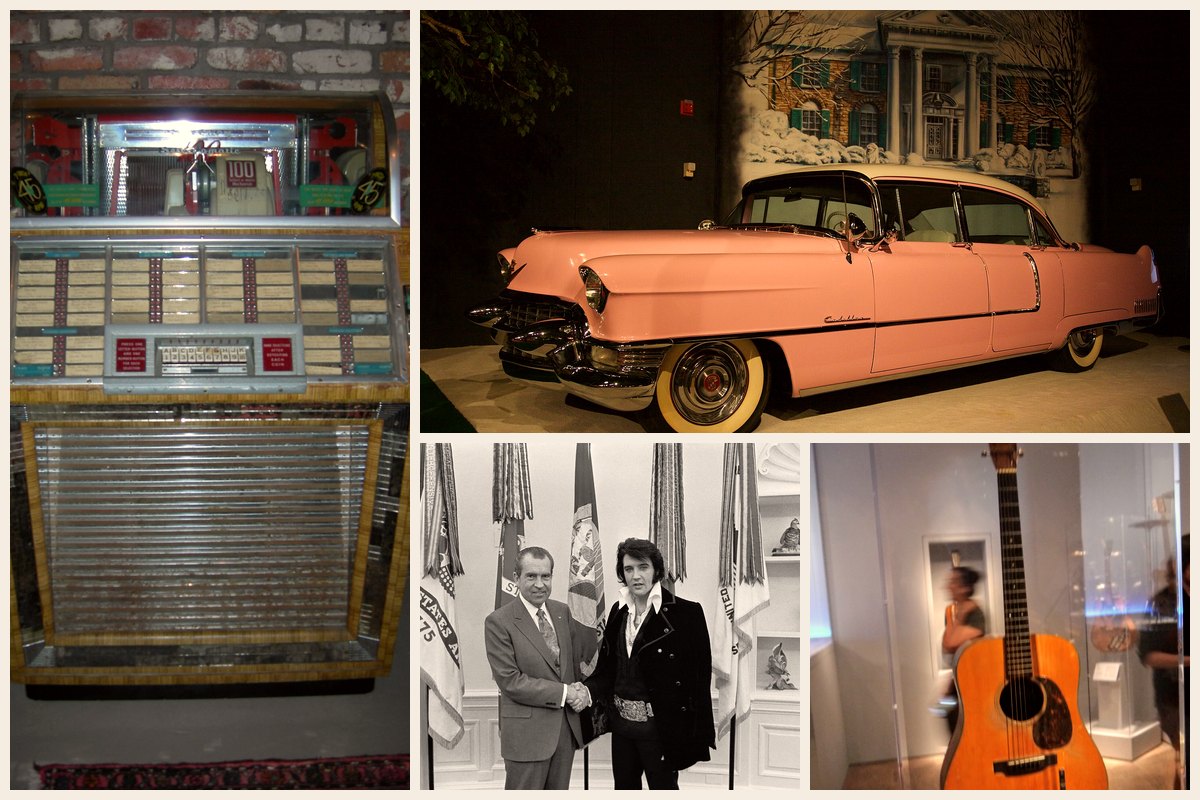
For many of us, it is also a time machine. Play it and you can almost hear the jukebox in the corner diner, see the drive-in screen, and feel what it was like when rock and roll was brand new.
Listening Tips: Where to Go Next
- Start with the original 1957 single. The mono recording is short, punchy and exactly how radio listeners first heard it.
- Watch the film scene. The dance number in Jailhouse Rock (1957) is the best way to see the song the way moviegoers did.
- Compare the ’68 Comeback version. It is rougher, faster and full of grown-up swagger.
- Flip the single. “Treat Me Nice,” the B-side, is another Leiber and Stoller song from the film.
- More Leiber and Stoller: Elvis’s “Hound Dog” and “(You’re So Square) Baby I Don’t Care,” and The Coasters’ “Yakety Yak.”
- A starter collection: ELV1S: 30 #1 Hits (2002) gathers “Jailhouse Rock” with the rest of his chart-toppers.
Fun Facts About “Jailhouse Rock”
- Co-writer Mike Stoller appears in the film as the band’s piano player, and Elvis’s real band, Scotty Moore, Bill Black and D.J. Fontana, play his band on screen.
- The film went through working titles including The Hard Way and Jailhouse Kid before MGM settled on Jailhouse Rock.
- During filming, Elvis mimed to his recordings, and the music was added to the finished scenes later.
- Elvis’s famous hairstyle and sideburns were covered with a wig and makeup for the musical and jail scenes.
- In 1991, Leiber and Stoller received an ASCAP award for “Jailhouse Rock” as one of the most-performed feature film standards.
“Jailhouse Rock” Quick Facts
| Artist | Elvis Presley |
| Written by | Jerry Leiber and Mike Stoller |
| Recorded | April 30, 1957, Radio Recorders, Hollywood |
| Single release | September 24, 1957 (RCA Victor) |
| B-side | “Treat Me Nice” |
| Film | Jailhouse Rock (MGM, 1957), directed by Richard Thorpe |
| Billboard pop peak | No. 1 for seven weeks (1957) |
| Other charts | No. 1 R&B, No. 1 country, No. 1 UK (1958) |
| Honors | Grammy Hall of Fame, AFI’s 100 Years…100 Songs (No. 21) |
| Featured video | ’68 Comeback Special performance (taped June 1968, aired December 3, 1968) |
Sources
- “Jailhouse Rock” (song) on Wikipedia (citing Rolling Stone, AFI and the Grammy Hall of Fame)
- Jailhouse Rock (1957 film) on Wikipedia (citing Guralnick, Jorgensen and MGM records)
- Elvis (1968 TV program), the ’68 Comeback Special, on Wikipedia
- Elvis Presley on Wikipedia (1957 timeline: Ed Sullivan, Graceland, draft notice)
Photo Credits
- Featured image: Elvis Presley at the White House, 1970 by Ollie Atkins, White House photographer, public domain, via Wikimedia Commons
- Featured image: Sun Studio, Memphis, 2006 by David Jones, CC BY 2.0, via Wikimedia Commons
- Featured image: Graceland, Memphis by Maha, CC BY 2.5, via Wikimedia Commons
- Featured image: Scotty Moore’s Gibson Super 400 and the Sun Records disc recorder, Musicians Hall of Fame and Museum by Michael Gaylard, CC BY 2.0, via Wikimedia Commons
- In-article image: Seeburg Select-o-matic jukebox by Joe Mabel, CC BY-SA 3.0, via Wikimedia Commons
- In-article image: Elvis’s pink Cadillac, Graceland by David Brossard, CC BY-SA 2.0, via Wikimedia Commons
- In-article image: Elvis Presley meets President Richard Nixon, 1970 by Ollie Atkins, White House photographer, public domain, via Wikimedia Commons
- In-article image: Elvis Presley’s 1942 C. F. Martin D-18 guitar, Play It Loud exhibition, The Met by Eden, Janine and Jim, CC BY 2.0, via Wikimedia Commons