Fifty-three years ago this week, on the Billboard Hot 100 dated October 20, 1973, the No. 1 song in America was not a stomping rocker. It was a quiet, aching ballad built on acoustic guitar and piano, sung by a man better known for strutting and shouting. The song was “Angie,” the band was the Rolling Stones, and for one autumn week in 1973 it was the most popular record in the country.
In this On This Day feature, we look back at how “Angie” was made in Jamaica, the long-running mystery about who it was written for, why the record company was nervous about it, and why it still sounds so tender today. The official promo film is waiting for you at the end of the article.
▶️ Want to hear it first? Scroll down. The official “Angie” promo is at the end of the article.
The Stones in 1973
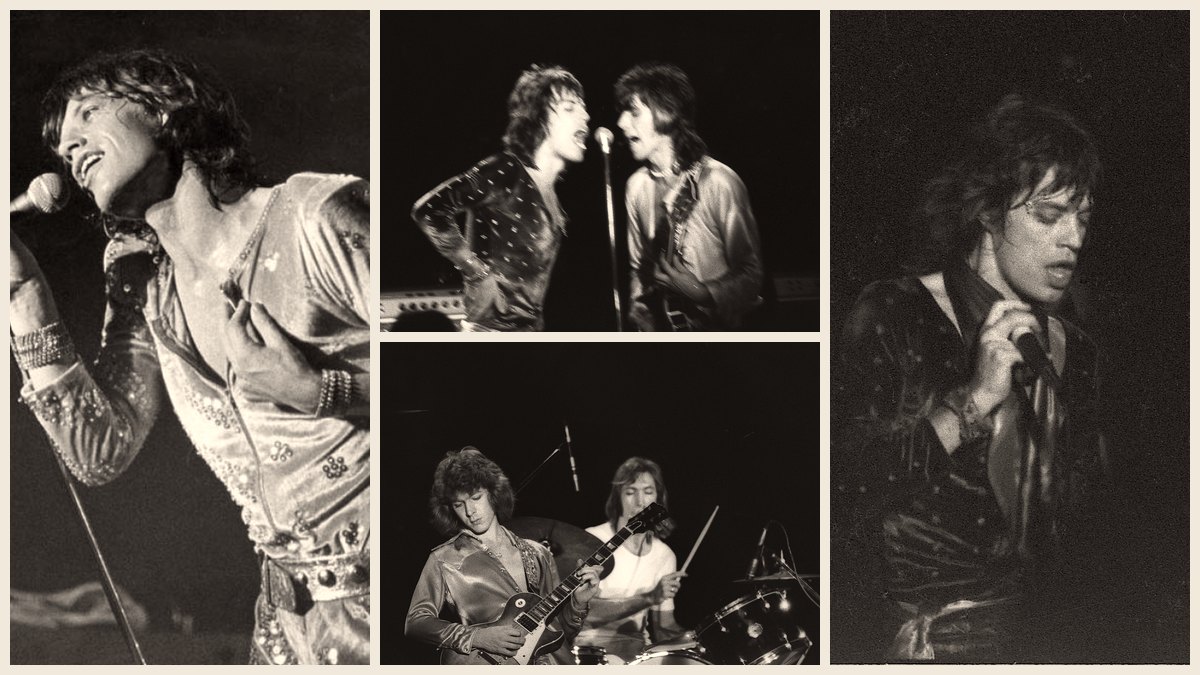
Think back to where the Rolling Stones were in the early 1970s. They had just released Exile on Main St. in 1972, and they were living as tax exiles, recording outside Britain. The lineup was Mick Jagger, Keith Richards, Mick Taylor, Bill Wyman and Charlie Watts, and they had spent the summer of 1972 on a huge American tour.
For their next album, the band went somewhere new. In November 1972 they moved into Dynamic Sounds studio in Kingston, Jamaica. As Keith Richards later put it, “Jamaica was one of the few places that would let us all in!” Marshall Chess, then president of Rolling Stones Records, said the band would book a studio for a month, 24 hours a day, so they could jam and develop songs in their own free-form way.
A Ballad Recorded in Jamaica
“Angie” was recorded in November and December 1972. Like most Stones songs, it is credited to Jagger and Richards. It is an acoustic guitar-driven ballad about the end of a romance, and much of its beauty comes from the piano part, written by Richards and played on the record by Nicky Hopkins, a regular on Stones sessions. Nicky Harrison arranged the strings.
If you listen closely with headphones, you may notice something unusual. Mick Jagger’s guide vocal, recorded before the final take, can be faintly heard throughout the song, a little “ghost vocal” behind the real one. The trade press loved the result. Cash Box said “Jagger is at his best,” and Record World called it a “tender ballad” on which “Mick Jagger’s vocal is moving and sensuous.”
A Risky Choice for a Single
Not everyone was convinced. According to Marshall Chess, Atlantic Records “wanted another ‘Brown Sugar’ rather than a ballad.” The band chose “Angie” anyway as the lead single from the new album, Goats Head Soup. The single came out on August 20, 1973, and the album followed on August 31.
Who Was Angie?
Few songs have inspired as much guessing. Over the years, fans and writers have suggested that “Angie” was about David Bowie’s first wife, Angela, about the actress Angie Dickinson, or about Keith Richards’ baby daughter, Dandelion Angela. In 1993, in liner notes for the compilation Jump Back, Richards said the title was inspired by his daughter.
Then, in his 2010 memoir Life, he told a different story. He said he had chosen the name before he even knew his baby would be a girl: “I just went, ‘Angie, Angie.’ It was not about any particular person; it was a name, like ‘ohhh, Diana.’” According to NME, Jagger’s contributions to the lyrics referred to his breakup with Marianne Faithfull. Jagger and Richards have both consistently denied the Bowie rumor.
Perhaps the mystery is part of the appeal. Without a clear answer, every listener gets to hear their own goodbye in it.
Climbing to No. 1
“Angie” entered the Billboard Hot 100 at No. 75 and kept climbing through September. On the chart dated October 20, 1973, it reached the top, taking over from Cher’s “Half-Breed.” A week later it gave way to Gladys Knight & the Pips’ “Midnight Train to Georgia.” It was the Stones’ seventh No. 1 on the Hot 100, and only one more would follow, “Miss You” in 1978.
The song did even better elsewhere. It spent five weeks at No. 1 in both Canada and Australia, topped charts across Europe, and reached No. 5 in Britain. Goats Head Soup went to No. 1 in both the United States and the United Kingdom. (If you are curious about Cher, the singer it knocked off the top, read our story of Cher’s “If I Could Turn Back Time” look.)
Too Long for Radio?
At around four and a half minutes, “Angie” was long for AM radio in 1973. Some stations made their own edits to bring it down to about three minutes, cutting the long coda and the second instrumental section. Two promotional films were shot to go with the single, and the band supported the album with a European tour that autumn.
Why We Still Love It
Some critics have seen Goats Head Soup as the start of a slower period for the Stones after their run of classic records, but its reputation has grown over time. A 2020 remix by Giles Martin, released with unheard outtakes, even sent the album back to No. 1 in Britain. It was also the last Stones album produced by Jimmy Miller, who had worked with the band since Beggars Banquet in 1968.
“Angie” itself never really went away. It has been a regular in the band’s concerts since their 1982 European tour, and live versions appear on Stripped, Live Licks and Havana Moon. Womack & Womack covered it in 1983, and Stereophonics recorded it in 1999. For many of us, though, the original is the one that matters: a rock and roll band, famous for swagger, showing that it could also be gentle.
Listening Tips
- Hear the whole album. Goats Head Soup (1973) also has “Doo Doo Doo Doo Doo (Heartbreaker),” “Winter” and “Silver Train.” Billy Preston, Bobby Keys, Nicky Hopkins and Ian Stewart all guest.
- Try the 2020 edition. Giles Martin’s remix and the deluxe outtakes give the album a fresh, clear sound.
- Go back one album. Exile on Main St. (1972) shows the looser, rootsier sound the band brought into the Jamaica sessions.
- Hear it acoustic. The 1995 album Stripped includes a stripped-down live “Angie.”
- Explore the decade. For another 1970s classic, read the story of the Eagles’ “Hotel California”, or look back at Ike & Tina Turner’s “Proud Mary” on Ed Sullivan.
“Angie” Quick Facts
| Artist | The Rolling Stones |
| Album | Goats Head Soup (August 31, 1973) |
| Single released | August 20, 1973 (B-side: “Silver Train”) |
| Length | 4:33 |
| Written by | Mick Jagger and Keith Richards |
| Recorded | November–December 1972, Dynamic Sounds, Kingston, Jamaica |
| Producer | Jimmy Miller |
| Piano | Nicky Hopkins |
| Strings arranged by | Nicky Harrison |
| Hot 100 No. 1 | Chart dated October 20, 1973 (one week) |
| UK peak | No. 5 |
Sources
- “Angie” on Wikipedia (with its cited sources, including Billboard, Cash Box and Record World)
- Goats Head Soup on Wikipedia
- List of Billboard Hot 100 number ones of 1973 on Wikipedia
- Billboard Hot 100, October 20, 1973
- Official Rolling Stones website
Photo Credits
- Featured image: Mick Jagger in concert at Vejlby-Risskov-Hallen, Aarhus, October 4, 1973 by Jens-Kristian Søgaard, CC BY-SA 4.0, via Wikimedia Commons
- Featured image: Mick Jagger and Keith Richards in Akron, Ohio, July 11, 1972 by Flickr user 71119007@N03, CC BY 2.0, via Wikimedia Commons
- Featured image: Mick Taylor and Charlie Watts in Akron, Ohio, July 11, 1972 by Flickr user 71119007@N03, CC BY 2.0, via Wikimedia Commons
- Featured image: Mick Jagger in Akron, Ohio, July 11, 1972 by Flickr user 71119007@N03, CC BY 2.0, via Wikimedia Commons
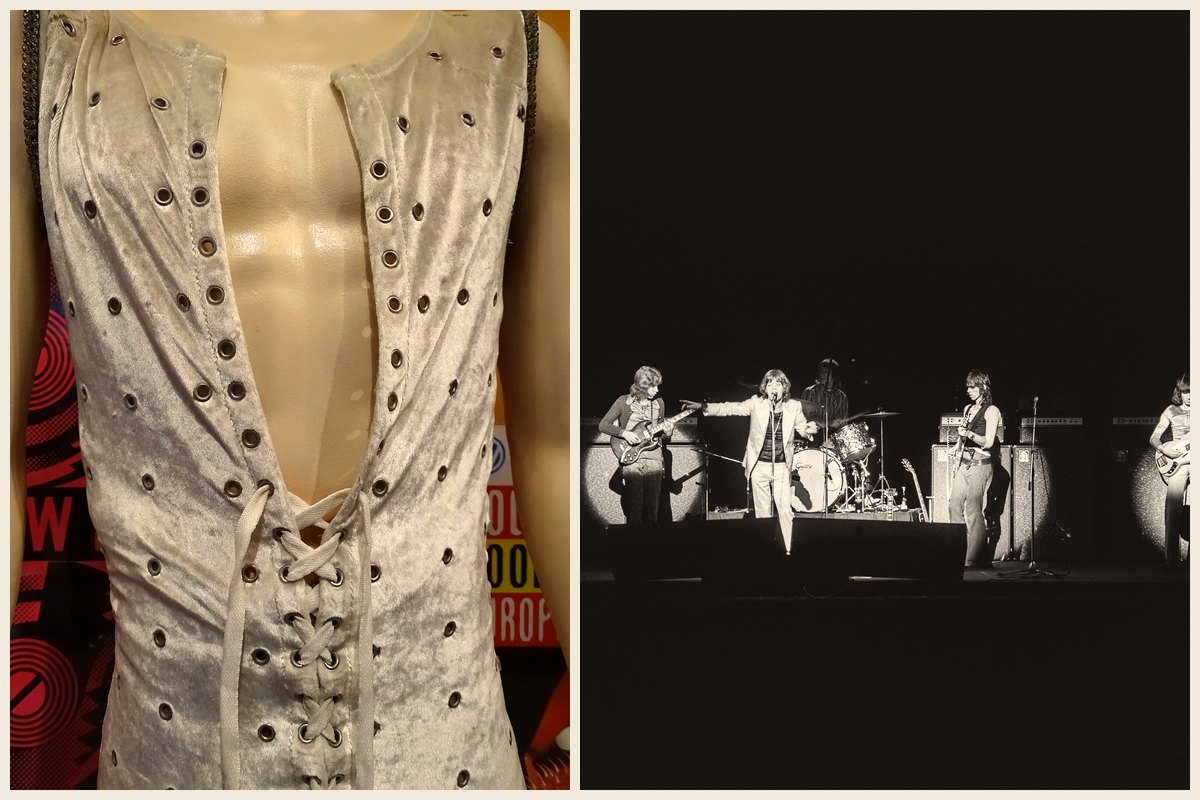
- In-article image: Mick Jagger’s 1972 tour jumpsuit, Rock and Roll Hall of Fame, Cleveland by Adam Jones, CC BY-SA 2.0, via Wikimedia Commons
- In-article image: The Rolling Stones at Helsinki Olympic Stadium, September 2, 1970 by Kari Pulkkinen, public domain, via Wikimedia Commons