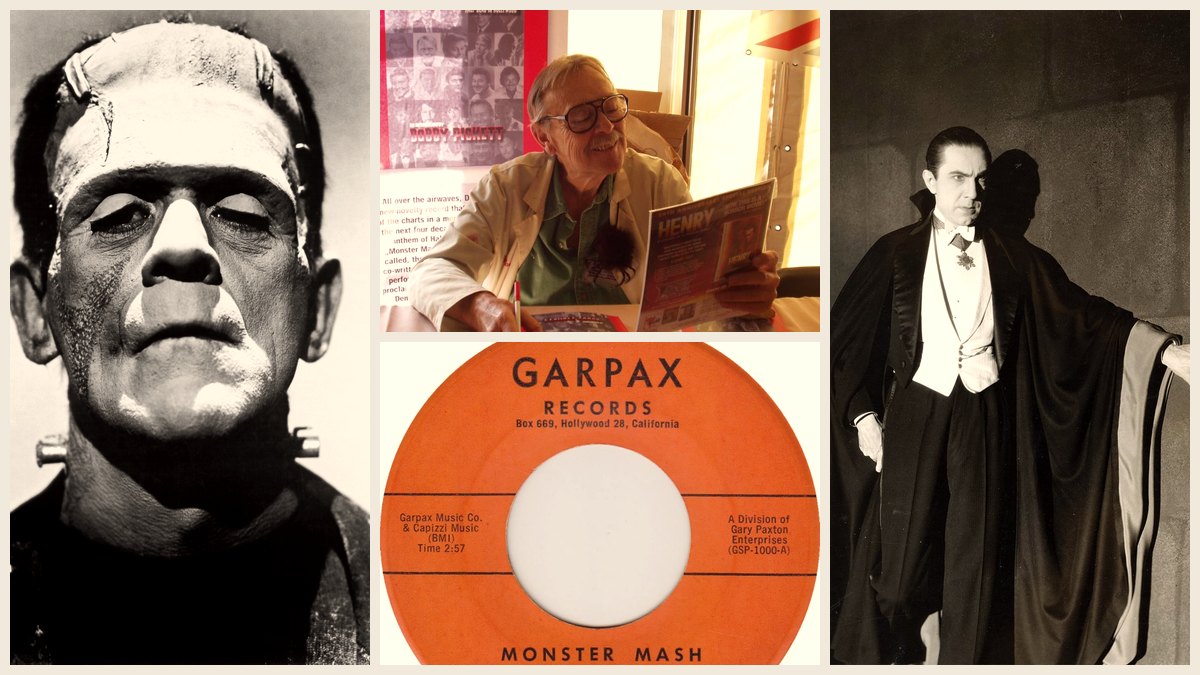
Sixty-four years ago today, on the Billboard Hot 100 dated October 20, 1962, America’s favorite new dance came from a laboratory. A mad scientist was working late one night when his monster rose from the slab and started to move. The song was “Monster Mash,” the singer was a young actor named Bobby “Boris” Pickett, and with Halloween just around the corner it became the No. 1 record in the country.
In this On This Day feature, we look back at how a nightclub impression turned into a chart-topper, who really played on the record, how a rusty nail and a drinking straw made the spooky sounds, and why the song keeps coming back from the grave every October. The official video is waiting for you at the end of the article.
▶️ Want to join the party at the castle first? Scroll down. The official “Monster Mash” lyric video is at the end of the article.
A Boy Who Grew Up at the Movies
Robert George Pickett was born on February 11, 1938, in Somerville, Massachusetts, just outside Boston. His father managed a local movie theater, and that gave young Bobby a front-row seat to the classic horror films of the 1930s, including Dracula and Frankenstein, both from 1931. He started doing impressions of Hollywood stars at a young age.
After high school he served in the U.S. Army from 1956 to 1959 and was stationed in Korea. Then he headed to Hollywood with dreams of becoming an actor. To pay the bills, he sang at night with a band called the Cordials while going to auditions during the day.
The Impression That Started It All
One night, while the Cordials were performing the Diamonds’ hit “Little Darlin’,” Pickett did a spoken part in the voice of Boris Karloff, the actor famous for playing Frankenstein’s monster. The audience loved it. His bandmate Lenny Capizzi told him he should do more with that Karloff voice.
In May 1962, Pickett and Capizzi wrote “Monster Mash” together. At the time, America was crazy about dance songs like the Twist and the Mashed Potato, and the new song was a spoof of those crazes. The title is a wink at the Mashed Potato, and dancers even did the same footwork with Frankenstein-style arm moves.
Recording a Graveyard Smash
Getting the song released was not easy. Every major record label turned it down. Then producer Gary S. Paxton heard it and agreed to produce and engineer the record. Paxton already knew something about novelty hits, and his earlier hit “Alley Oop” was one of the inspirations for the song.
The backing singers were Fred “Johnny” MacRae, Rickie Page and Paxton himself. They were credited as “The Crypt-Kickers,” a name taken from the song’s own fictional house band, the Crypt-Kicker Five. According to Pickett, the band was Chuck Hamilton on bass, Jesse Sailes on drums, Billy Lee Riley on guitar and Paxton on piano and Hammond organ. Some sources say Leon Russell played piano, but Pickett later explained that Russell arrived late to the session and only played on the flip side.
Homemade Sound Effects
Part of the fun of “Monster Mash” is its spooky sound effects, and they were made with everyday objects. The creak of a coffin opening was really a rusty nail being pulled out of a board. The bubbling cauldron was water bubbled through a drinking straw, a trick the Beatles would later use on “Yellow Submarine.” The rattling chains were simply chains dropped on a tile floor.
A Story Told in Three Voices
Pickett tells the song as a funny horror story, and he never repeats a line except the words “Monster Mash.” The narrator is a mad scientist whose monster wakes up and invents a new dance. The scientist throws a party, and the dance becomes “the hit of the land” as classic movie monsters arrive, including the Wolfman, Igor, the Mummy and Dracula’s son.
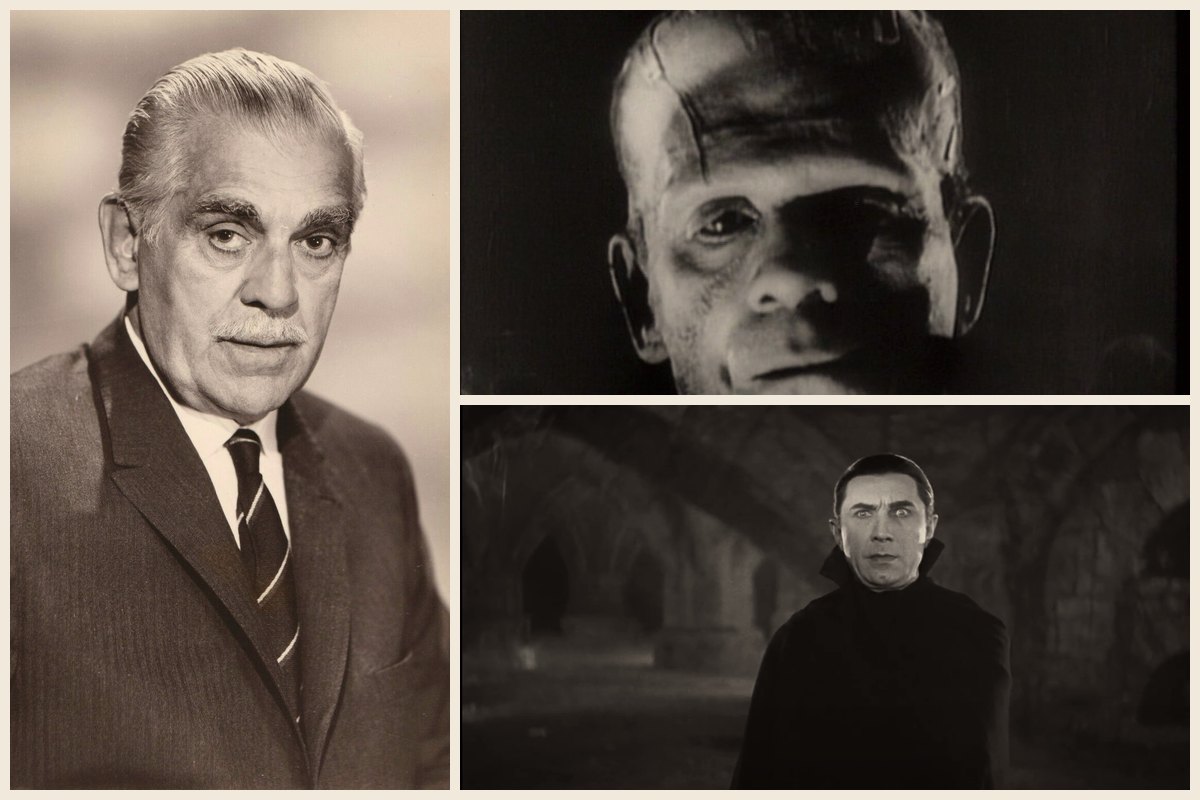
Pickett sings the scientist in his Karloff voice, but he also borrows two other horror stars. He imitates Bela Lugosi as Count Dracula with the line “Whatever happened to my Transylvania Twist?” and he imitates Peter Lorre for Igor, even though Lorre never played that role. In the end, Dracula joins the band and the scientist invites “you, the living” to his castle.
Two Weeks at No. 1, Just Before Halloween
“Monster Mash” was released in August 1962 on Paxton’s own Garpax Records label, credited to “Bobby (Boris) Pickett and the Crypt-Kickers.” It came with a full-length album, The Original Monster Mash, full of more monster-themed tunes. The single was a fast success and became a million-seller.
On the Hot 100 dated October 20, 1962, it reached No. 1, replacing “Sherry” by the Four Seasons. It stayed on top for two weeks, through the chart of October 27, right before Halloween. It was then replaced by “He’s a Rebel” by the Crystals. It was Pickett’s only No. 1, and his Christmas-themed follow-up, “Monsters’ Holiday,” reached No. 30 that December.
Novelty or not, it belongs to a fun stretch of chart history. Rock and roll had already gone to jail with Elvis Presley’s “Jailhouse Rock”, and later in the decade the charts would welcome the Monkees’ “Daydream Believer” and Lulu’s “To Sir With Love”. “Monster Mash” sits happily among them as the decade’s spookiest No. 1.
The Song That Keeps Rising From the Grave
Like any good monster, “Monster Mash” refused to stay buried. The BBC banned it from airplay in 1962 for being “too morbid,” but a 1973 re-release finally reached No. 3 in the United Kingdom in October of that year. In the United States, the record returned to the Billboard charts in August 1970 and again in May 1973, when it climbed to No. 10 in August. It also reached No. 1 in Canada on August 4, 1973. The 1970 reissue on the Parrot label was certified Gold on August 28, 1973.
The comeback did not stop there. In 2021, nearly 60 years after its release, the song re-entered the Billboard Hot 100 at No. 37. As of 2023, it was reported to earn about $1 million a year in royalties. Pickett had kept the song alive in his own way too: he released “Monster Rap” in 1984, starred in the 1995 film Monster Mash: The Movie, and published an autobiography, Monster Mash: Half Dead in Hollywood, in 2005.
Covers From Punks to Alice Cooper
Many artists have joined the party. The Bonzo Dog Doo-Dah Band recorded it in 1969, the horror punk band the Misfits released their version as a single in 1999, and Andrew Gold recorded it with Linda Ronstadt on background vocals in 1996. Canada’s Rush sampled it in “Limbo” on their 1996 album Test for Echo, the Wiggles recorded it in 2023, and Alice Cooper cut a version in 2024.
Bobby “Boris” Pickett died of leukemia in Los Angeles on April 25, 2007, at age 69. For many years he had performed at a Boston-area radio Halloween show, and every October his voice still fills radios, parties and trick-or-treat nights. Not bad for a song that every major label once said no to.
Listening Tips
- Listen for the effects. Use headphones and try to spot the coffin creak, the bubbling cauldron and the rattling chains.
- Count the voices. Pickett switches between Boris Karloff, Bela Lugosi and Peter Lorre. See if you can hear where each one starts.
- Try the sequel. “Monsters’ Holiday” (1962) brings the monsters back for Christmas.
- Compare a cover. The Misfits’ fast and loud version is a fun contrast to the original’s easy groove.
- Explore the decade. Browse more 60s Classics and Pop stories.
“Monster Mash” Quick Facts
| Artist | Bobby “Boris” Pickett and the Crypt-Kickers |
| Written by | Bobby Pickett and Lenny Capizzi |
| Producer | Gary S. Paxton |
| Label | Garpax Records |
| Released | August 1962 |
| Hot 100 No. 1 | Charts dated October 20 and 27, 1962 (two weeks) |
| Before and after | Followed “Sherry” by the Four Seasons; replaced by “He’s a Rebel” by the Crystals |
| Later chart runs | No. 10 in the U.S. (1973), No. 3 in the UK (1973), No. 37 on the Hot 100 (2021) |
| Voices imitated | Boris Karloff, Bela Lugosi and Peter Lorre |
Sources
- “Monster Mash” on Wikipedia (with its cited sources, including Billboard)
- Bobby “Boris” Pickett on Wikipedia
- List of Billboard Hot 100 number ones of 1962 on Wikipedia
- Billboard Hot 100, October 20, 1962
Photo Credits
- Featured image: Boris Karloff as Frankenstein’s monster by Universal Studios, public domain, via Wikimedia Commons
- Featured image: Bobby “Boris” Pickett at the Chiller Theatre convention, 2005 by Leslie Gottlieb, CC BY 2.0, via Wikimedia Commons
- Featured image: “Monster Mash” 7-inch US single label by Garpax Records, public domain, via Wikimedia Commons
- Featured image: Bela Lugosi as Dracula, 1931 by an unknown photographer for Universal Studios, public domain, via Wikimedia Commons
- In-article image: Boris Karloff, 1961 by NBC Television, public domain, via Wikimedia Commons
- In-article image: Boris Karloff in the Bride of Frankenstein trailer by Universal Studios, public domain, via Wikimedia Commons
- In-article image: Bela Lugosi in the Dracula (1931) trailer by Universal Studios, public domain, via Wikimedia Commons