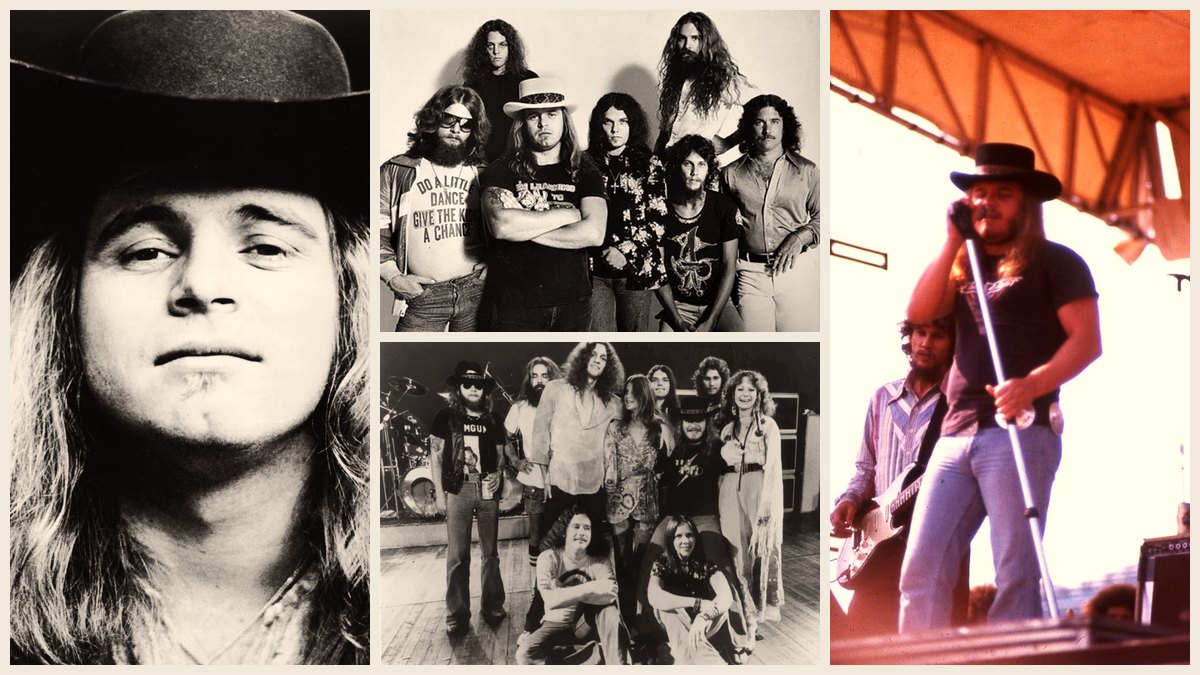
Forty-nine years ago today, on the evening of October 20, 1977, a small chartered plane carrying Lynyrd Skynyrd ran out of fuel and crashed into a wooded area near Gillsburg, Mississippi. Singer Ronnie Van Zant, guitarist Steve Gaines and backing singer Cassie Gaines were among the six people who died. The band’s new album had been in stores for just three days.
In this On This Day feature, we remember the Jacksonville band that defined Southern rock, tell the story of “Free Bird,” the song that became their farewell, and look at how the music carried on. The official live video is waiting for you at the end of the article.
▶️ Want to hear that famous guitar solo right now? Scroll down. The official “Free Bird” live video is at the end of the article.
A Garage Band From Jacksonville
The story begins in Jacksonville, Florida, in the summer of 1964. Ronnie Van Zant, Gary Rossington and drummer Bob Burns knew each other from rival baseball teams. After a ball hit by Van Zant injured Burns, the three decided to jam together in the carport of Burns’ parents’ house, starting with the Rolling Stones’ “Time Is on My Side.” They added bassist Larry Junstrom and guitarist Allen Collins and called themselves My Backyard.
The band went through several names over the next four years. In 1968 they settled on a version of “Leonard Skinner,” a mocking tribute to a gym teacher at Robert E. Lee High School who was known for strictly enforcing the school’s rule against long hair on boys. The spelling became Lynyrd Skynyrd, and by 1970 they were one of the top bands in Jacksonville.
Discovered by Al Kooper
In 1972, musician and producer Al Kooper, known from Blood, Sweat & Tears, saw the band play at Funocchio’s in Atlanta. He signed them to his Sounds of the South label, distributed by MCA Records, and produced their first album. It was released in 1973 with a title that taught fans how to say the name: (Pronounced ‘Lĕh-‘nérd ‘Skin-‘nérd). The record included “Tuesday’s Gone,” “Gimme Three Steps,” “Simple Man” and a long closing song called “Free Bird.”
That same year, the band won a big new audience as the opening act on the Who’s Quadrophenia tour of the United States. In 1974 the album Second Helping gave them their biggest hit single, “Sweet Home Alabama,” which reached No. 8 on the Billboard Hot 100 that August.
The Song That Became Their Signature
“Free Bird” was written by Allen Collins and Ronnie Van Zant. According to Rossington, Collins had the chords for two years before Van Zant could find a melody for them. One day at rehearsal Collins played the sequence again, and Van Zant wrote the melody and lyrics in three or four minutes. The famous opening line came from a question Collins’ girlfriend Kathy, who later became his wife, once asked him: “If I leave here tomorrow, would you still remember me?”
The long guitar ending was first added to give Van Zant a rest, because the band was playing several sets a night in clubs. Roadie Billy Powell had written a piano introduction for the song, and when the band heard it they not only kept it but also made him their keyboardist.
Released as a single in November 1974, “Free Bird” reached No. 19 on the Hot 100 in January 1975. A live version recorded at Atlanta’s Fox Theatre for the 1976 album One More from the Road charted again in early 1977. On that record you can hear Van Zant ask the crowd, “What song is it you want to hear?” before a fourteen-and-a-half-minute performance. In concert the band dedicated the song to Duane Allman of the Allman Brothers Band.
Like the Eagles’ “Hotel California”, it became one of the defining long rock songs of the decade. It was once the most requested song on FM radio and remains a staple on classic rock stations.
Street Survivors and October 20, 1977
By 1977 Lynyrd Skynyrd had a new member. Guitarist and singer Steve Gaines had joined about a year earlier on the recommendation of his older sister, Cassie, who sang in the band’s backing trio, the Honkettes. Van Zant was so impressed by Gaines that he said the band would “all be in his shadow one day.” Their fifth studio album, Street Survivors, was released on October 17, 1977, and showcased Gaines’ guitar and voice.
On October 19, the band played the Greenville Memorial Auditorium in South Carolina. The next day they boarded a chartered Convair CV-240 for a show at Louisiana State University in Baton Rouge. Near the end of the flight the plane ran out of fuel. The pilots tried to reach McComb Airport and then an open field, but at about 6:52 p.m. the plane came down in the trees near Gillsburg.
Ronnie Van Zant, Steve Gaines, Cassie Gaines, assistant road manager Dean Kilpatrick, Captain Walter McCreary and First Officer William John Gray died. Twenty other people survived, most with serious injuries. The National Transportation Safety Board later found that crew inattention to the fuel supply was responsible for the crash. Van Zant was 29 years old.
An Album Cover Changed
The original cover of Street Survivors showed the band standing on a city street surrounded by flames. After the crash, MCA withdrew it out of respect for those who died and replaced it with a photo of the band against a plain black background. The album went gold just 10 days after its release and reached No. 5, the band’s highest-charting album, while “What’s Your Name” became a Top 20 single.
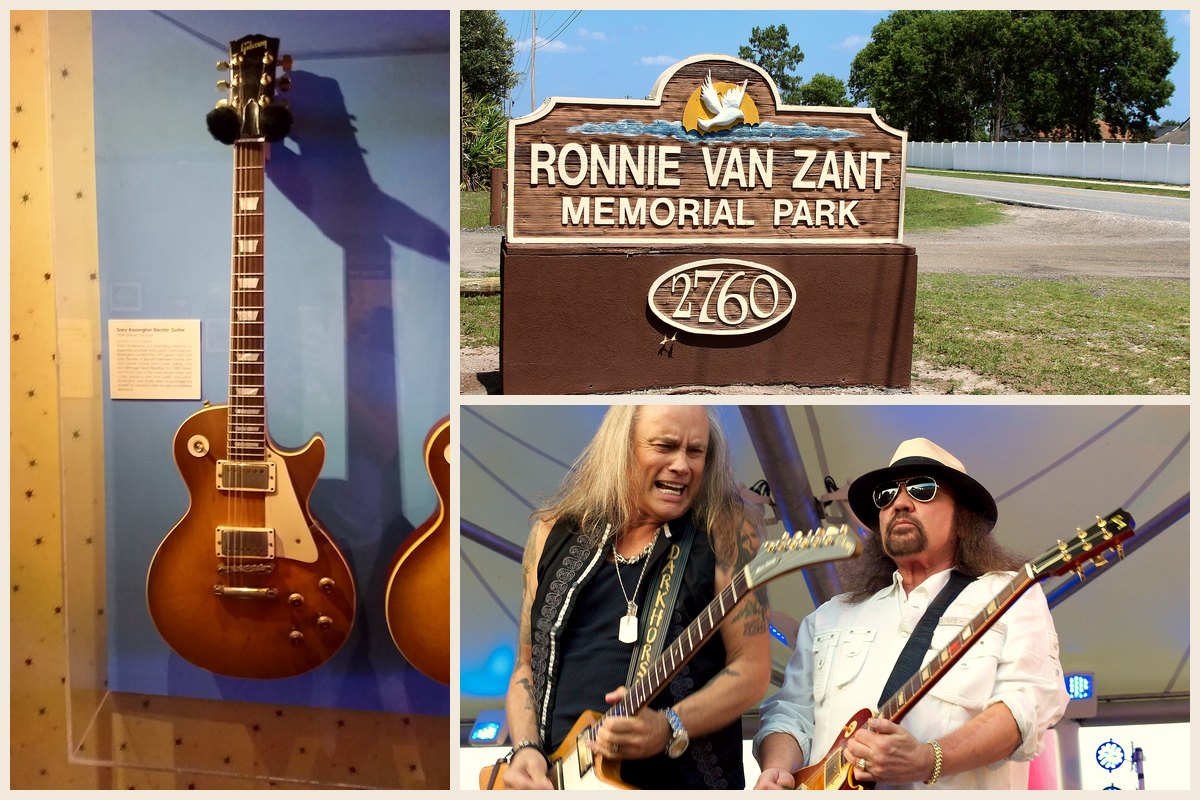
How the Music Carried On
After the crash, the band broke up. The survivors came together only once in the following years, in January 1979, to play an instrumental “Free Bird” at Charlie Daniels’ Volunteer Jam. Rossington, Collins, Powell and bassist Leon Wilkeson then formed the Rossington Collins Band, and they always ended their concerts with an instrumental “Free Bird” too.
In 1987, ten years after the crash, Lynyrd Skynyrd reunited for a tribute tour with Ronnie’s younger brother, Johnny Van Zant, as lead singer. On that tour the band played “Free Bird” as an instrumental. Johnny first sang the song on the band’s 1991 tour in Baton Rouge, the city they had been flying to in 1977.
Lynyrd Skynyrd was inducted into the Rock and Roll Hall of Fame on March 13, 2006, and the inductees included Ronnie Van Zant and Steve Gaines. “Free Bird” was inducted into the Grammy Hall of Fame in 2008 and ranked No. 407 on Rolling Stone‘s list of the 500 Greatest Songs of All Time. Fans built the Ronnie Van Zant Memorial Park near his hometown, and the crash site in Mississippi has become a memorial too.
The 1970s gave rock many great moments, from the Rolling Stones’ “Angie” to Jimi Hendrix’s “Star-Spangled Banner” at Woodstock just before the decade began. Few are remembered with as much emotion as Lynyrd Skynyrd, a band whose story was cut short and whose most famous song asks to be remembered.
Listening Tips
- Start with the debut. (Pronounced ‘Lĕh-‘nérd ‘Skin-‘nérd) (1973) has “Free Bird,” “Simple Man,” “Tuesday’s Gone” and “Gimme Three Steps.”
- Hear it live. The Fox Theatre version on One More from the Road (1976) is the one many fans love most.
- Spend time with Street Survivors. Listen for Steve Gaines on “You Got That Right,” which he sang with Van Zant, and “I Know a Little.”
- Do not skip “Sweet Home Alabama.” It is the band’s biggest hit single, from Second Helping (1974).
- Explore the decade. Browse more 70s Gold and Rock stories.
Lynyrd Skynyrd and “Free Bird” Quick Facts
| Band | Lynyrd Skynyrd, formed in Jacksonville, Florida, in 1964 |
| “Free Bird” written by | Allen Collins and Ronnie Van Zant |
| Album | (Pronounced ‘Lĕh-‘nérd ‘Skin-‘nérd) (1973), produced by Al Kooper |
| Single peak | No. 19 on the Hot 100 (January 1975) |
| Last album with Ronnie Van Zant | Street Survivors, released October 17, 1977 |
| Plane crash | October 20, 1977, near Gillsburg, Mississippi |
| Lost in the crash | Ronnie Van Zant, Steve Gaines, Cassie Gaines, Dean Kilpatrick, Walter McCreary and William John Gray |
| Reunion | 1987, with Johnny Van Zant on lead vocals |
| Rock and Roll Hall of Fame | Inducted March 13, 2006 |
Sources
- Lynyrd Skynyrd plane crash on Wikipedia (with its cited sources, including the NTSB report)
- Lynyrd Skynyrd on Wikipedia
- “Free Bird” on Wikipedia
- Street Survivors on Wikipedia
- Ronnie Van Zant on Wikipedia
- Official Lynyrd Skynyrd website
Photo Credits
- Featured image: Ronnie Van Zant press photo, 1976 by MCA Records, public domain, via Wikimedia Commons
- Featured image: Lynyrd Skynyrd in a 1977 trade ad by MCA Records, public domain, via Wikimedia Commons
- Featured image: Lynyrd Skynyrd and the Honkettes, 1976 by MCA Records, public domain, via Wikimedia Commons
- Featured image: Ronnie Van Zant performing “Free Bird” at Soldier Field, Chicago, July 10, 1977 by Jimmy Barnes Photography, CC BY-SA 4.0, via Wikimedia Commons
- In-article image: Gary Rossington’s 1959 Gibson Les Paul at the Rock and Roll Hall of Fame by Zurich_99, CC BY-SA 2.0, via Wikimedia Commons
- In-article image: Ronnie Van Zant Memorial Park by Richard Elzey, CC BY 2.0, via Wikimedia Commons
- In-article image: Rickey Medlocke and Gary Rossington live, 2011 by Jon Callas, CC BY 2.0, via Wikimedia Commons