Fifty-nine years ago this week, on the Billboard Hot 100 dated October 21, 1967, a teenager from Glasgow reached No. 1 in America with a song most of her fans back home had never heard on the radio. The singer was Lulu, the song was “To Sir With Love,” and it stayed at the top for five straight weeks. By the end of the year, it was the best-selling single in the United States.
In this On This Day feature, we look back at the Sidney Poitier film that gave the song its name, the young Scottish singer who acted in it, and how a B-side became America’s biggest hit of 1967. At the end, you’ll find Lulu’s live performance of the song on The Ed Sullivan Show from that same October.
▶️ Want to hear it first? Scroll down. Lulu’s Ed Sullivan Show performance is at the end of the article.
A Real Lulu of a Kid
She was born Marie McDonald McLaughlin Lawrie on November 3, 1948, and grew up in Glasgow. At 12 or 13 she was already singing on Saturday nights with a local band, and at 14 she got her stage name from her future manager, Marion Massey, who said: “Well, all I know is that she’s a real lulu of a kid.”
In 1964, at just 15, she hit the British Top 10 with a raucous cover of the Isley Brothers’ “Shout,” credited to Lulu & the Luvvers. In 1966 she toured Poland with the Hollies, becoming the first British female singer to perform live behind the Iron Curtain. Then she signed with Columbia and producer Mickie Most, and in April 1967 she was back in the UK Top 10 with Neil Diamond’s “The Boat That I Row.”
The Film: To Sir, with Love
That same year, Lulu made her acting debut. To Sir, with Love was written and directed by James Clavell and based on E. R. Braithwaite’s 1959 autobiographical novel. Sidney Poitier starred as Mark Thackeray, an engineer from British Guiana who takes a teaching job at a tough secondary school in London’s East End. He has no teaching experience, his students are rude and rebellious, and he wins them over by treating them as adults.
Lulu played one of the pupils, and she also sang the title song, which is heard more than once in the film, from the opening titles to the end of term. The film was made for about $600,000 and earned about $42.4 million, a remarkable success. Many of us still remember it as one of the warmest teacher movies ever made.
Writing the Song
The words were written by Don Black, and the music by Mark London, who happened to be the husband of Lulu’s manager, Marion Massey. Mickie Most produced the record, and Mike Leander arranged and conducted it. On the record Lulu is joined by the Mindbenders, the beat group who also appear in the film playing at the school dance.

The B-Side That Conquered America
Here is the twist. In Britain, “To Sir With Love” was only the B-side of another single, “Let’s Pretend,” which reached No. 11. The song never charted in the UK at all. In America, Epic Records put it on the same single as “The Boat That I Row,” and it was “To Sir With Love” that American listeners took to heart.
On the Hot 100 dated October 21, 1967, “To Sir With Love” replaced the Box Tops’ “The Letter” at No. 1. It held the top spot for five weeks, until “Incense and Peppermints” by Strawberry Alarm Clock took over in late November. It sold more than a million copies, earned a gold record, and was ranked by Billboard as the No. 1 song of the entire year. In Canada, both sides reached No. 1 on the CHUM chart.
That was quite a year to beat. 1967 was the year of Aretha Franklin’s “Respect”, and only a few weeks after Lulu’s run ended, the Monkees’ “Daydream Believer” began its own four weeks at the top.
A Rare Achievement
Lulu became only the second British female artist of the rock era to top the Hot 100, after Petula Clark with “Downtown” in 1965. She was the first Scottish woman to do it, and it would be 1981 before another Scottish woman, Sheena Easton, matched her with “Morning Train (9 to 5).”
Not everyone got the recognition they hoped for. When the song was left out of the nominations for Best Original Song at the 1968 Academy Awards, director James Clavell and Marion Massey raised a formal objection. It did not change the result, but audiences had already made up their minds.
On The Ed Sullivan Show
The night after the song reached No. 1, Lulu sang it live on The Ed Sullivan Show, broadcast on October 22, 1967. For many American families watching on a Sunday evening, it was the first time they saw the face behind the voice: an 18-year-old with a big smile and a voice much bigger than she was.
What Happened Next
- Eurovision: In 1969 her song “Boom Bang-a-Bang” jointly won the Eurovision Song Contest. Just weeks earlier, she had married Maurice Gibb of the Bee Gees. They divorced in the 1970s but stayed on good terms.
- A Bond theme: In 1974 she sang the title song for the James Bond film The Man with the Golden Gun.
- A UK No. 1 at last: In 1993 she topped the British chart with “Relight My Fire,” recorded with Take That.
- Back to class: In 1996, Lulu, Sidney Poitier and Judy Geeson returned for the TV sequel To Sir, with Love II.
- Honors: She was made an OBE in 2000 and a CBE in 2021 for services to music, entertainment and charity.
Why It Still Moves Us
“To Sir With Love” is a thank-you note set to music. It is about growing up, leaving school and realizing how much one good teacher can change a life. That feeling has not gone out of date. In 1993, 10,000 Maniacs and Michael Stipe of R.E.M. sang it at the MTV Inaugural Ball, and singers from Chaka Khan to Midge Ure have recorded it since.
Listening Tips
- Watch the film. To Sir, with Love (1967) is the best way to hear the song, at the school dance where it belongs.
- Hear where she started. Lulu’s 1964 “Shout” shows the powerhouse voice she had at 15.
- Flip the single. Neil Diamond’s “The Boat That I Row” was the other side of the American release.
- Try a jazz version. Herbie Mann’s instrumental cover charted at the same time as Lulu’s original.
- Explore the decade. Browse our 60s Classics, starting with the Beach Boys’ “Good Vibrations”.
“To Sir With Love” Quick Facts
| Artist | Lulu (with the Mindbenders) |
| Written by | Don Black (lyrics) and Mark London (music) |
| Producer | Mickie Most |
| Arranger and conductor | Mike Leander |
| Film | To Sir, with Love (1967), directed by James Clavell, starring Sidney Poitier |
| Hot 100 No. 1 | Chart dated October 21, 1967 (five weeks) |
| Billboard year-end | No. 1 single of 1967 |
| UK release | B-side of “Let’s Pretend” (No. 11) |
| Ed Sullivan Show | October 22, 1967 |
Sources
- “To Sir with Love” (song) on Wikipedia (with its cited sources, including Billboard)
- To Sir, with Love (film) on Wikipedia
- Lulu on Wikipedia
- List of Billboard Hot 100 number ones of 1967 on Wikipedia
- Billboard Hot 100, October 21, 1967
- “To Sir With Love (Performed live on The Ed Sullivan Show 10/22/67)” on YouTube (broadcast date)
Photo Credits
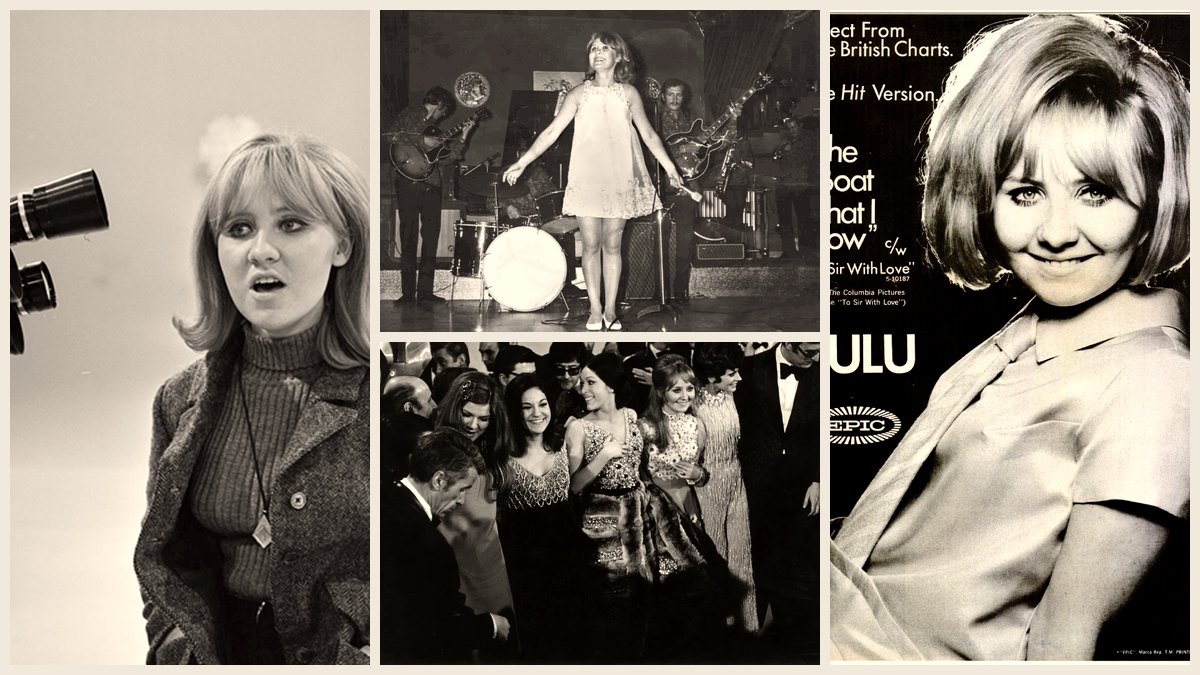
- Featured image: Lulu on the Dutch TV programme Fanclub, December 11, 1965 by R. Frings / Beeld & Geluid, CC BY-SA 3.0 nl, via Wikimedia Commons
- Featured image: Lulu with the Echoes in Glasgow, 1967 by UALRIGHTFRED, CC BY-SA 4.0, via Wikimedia Commons
- Featured image: The winners of the 1969 Eurovision Song Contest by Herman Selleslags / Nationaal Archief, CC0, via Wikimedia Commons
- Featured image: Billboard advertisement for “The Boat That I Row” and “To Sir With Love,” June 24, 1967 by Epic Records, public domain, via Wikimedia Commons
- In-article image: Lulu and Maurice Gibb, from Hit Parader, November 1970 by Hit Parader magazine, public domain, via Wikimedia Commons
- In-article image: Lulu guesting at a Jools Holland concert at Borde Hill, June 23, 2007 by Paste, public domain, via Wikimedia Commons
- In-article image: Sidney Poitier, publicity photo by unknown photographer, public domain, via Wikimedia Commons
Watch the Official “To Sir With Love” Ed Sullivan Performance
This official audio comes from Lulu’s live performance on The Ed Sullivan Show, broadcast on October 22, 1967.