
Some songs make you smile before you even know why. A few bars of horns, a guitar that seems to bounce, and that question we have all sung along to at weddings, block parties and roller rinks: do you remember “the 21st night of September”? Earth, Wind & Fire released “September” in November 1978, and nearly half a century later it is still the song that gets Grandma and the grandkids on the same dance floor.
In this Disco & Funk feature, we look at how the song was built from a guitar groove, the sweet family secret behind its famous date, the band’s glittering official video, and the albums and songs to play next. The video is waiting for you at the end of the article.
▶️ Feel like dancing already? Scroll down. The official video is waiting at the end of the article.
A Song Built on a Groove
“September” began with guitarist Al McKay, who came up with the chord sequence. Bandleader Maurice White and songwriter Allee Willis then spent about a month turning it into a song. The progression loops through the verses and choruses without a break, which is part of why it feels like it could go on forever.
The most famous part of the lyric is the part that means nothing at all. All through the song, White sang a nonsense phrase, “ba-dee-ya.” Willis was bothered by it and begged him to rewrite it with real words. White, in so many words, told her it did not matter. She later said it taught her the greatest songwriting lesson of her life: “never let the lyric get in the way of the groove.”
Why the 21st Night?
For years, Maurice White said he picked the 21st simply because it sounded best when sung. In a 2019 interview with The Wall Street Journal, his wife, Marilyn White, shared a sweeter version: September 21 was the expected birth date of their son, Kahbran. When she first heard the song, she said, “My whole body smiled.”
Earth, Wind & Fire in 1978
By 1978, Earth, Wind & Fire was one of the biggest acts in America. Maurice White had started the group in Chicago in 1969, after years as a session drummer at Chess Records and a stint in the Ramsey Lewis Trio, and soon moved it to Los Angeles. The lineup blended Philip Bailey’s soaring falsetto with White’s warm tenor, Verdine White’s bass, and a horn section that could fill an arena.
America was in the middle of the disco boom that year, but EWF never sounded like anyone else. They mixed funk, soul, jazz, gospel and pop, and on stage they were known for colorful, eye-catching costumes. “September” was one of two new songs recorded for The Best of Earth, Wind & Fire, Vol. 1, added to give fans a reason to buy a greatest-hits record. It turned out to be one of the best decisions of their career.
The Official Video
The official HD video on the band’s YouTube channel is a classic performance clip from the era. Maurice White sings straight to the camera in a bold striped tunic, smiling through every line, while the band, dressed in bright, patterned stage clothes, plays on a glittering set behind him. Other singers step up to share the spotlight, and the whole thing feels like a party you have been invited to.
There is no story to follow and no special effects to admire, and that is the charm. It is a chance to watch some of the finest musicians of the 1970s enjoying themselves, and it is the closest most of us will get to seeing them in their prime.
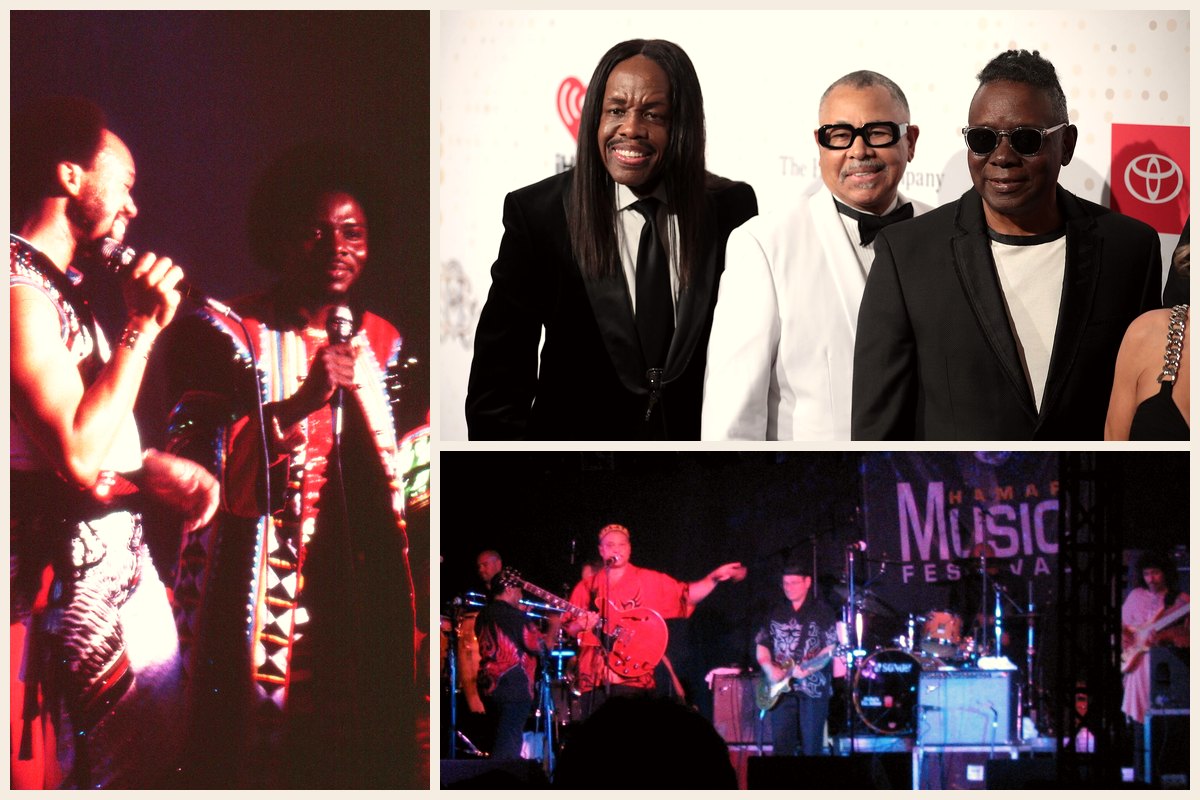
Those costumes were part of the band’s identity. If you love the look of 1970s stage wear, take a stroll through our Retro Fashion & Style section.
Chart Success and Honors
“September” was released as a single on November 18, 1978, by ARC/Columbia Records. It reached No. 1 on the Billboard Hot R&B Songs chart, No. 8 on the Billboard Hot 100 and No. 3 in the UK. It was certified gold in the United States, back when a gold single meant a million copies sold, and by September 2017 it had sold more than 2 million digital copies in the US. The album it came from, The Best of Earth, Wind & Fire, Vol. 1, has been certified five times platinum by the RIAA.
The honors kept coming long after the charts. In 2018, the Library of Congress added “September” to its National Recording Registry of sound recordings that are culturally, historically or aesthetically important. Rolling Stone ranked it No. 65 on its 2021 list of the 500 Greatest Songs of All Time. The band itself was inducted into the Rock and Roll Hall of Fame in 2000 and received the Kennedy Center Honors in 2019.
Why We Still Celebrate September 21
“September” has enjoyed a remarkable second life. Every September 21 for six years, comedian Demi Adejuyigbe posted popular remix videos built around the song, and the date has become a small holiday online. The song has turned up in films such as Night at the Museum (2006) and Trolls (2016), and football fans in Britain have turned its chorus into stadium chants.
The band even gave it a holiday makeover. For their 2014 Christmas album, Holiday, they recorded “December,” which changes the date to “the 25th night of December” but keeps everything else the same. Few songs can switch seasons that easily.
Remembering the Songwriters
Maurice White died on February 4, 2016, at age 74, after living for many years with Parkinson’s disease. Allee Willis, who also co-wrote “I’ll Be There for You,” the theme song from Friends, died on December 24, 2019, at age 72. Every time “September” plays at a wedding, a little of their joy is in the room.
A Listening Guide for Today
- Start with the album: The Best of Earth, Wind & Fire, Vol. 1 (1978), which gives you “September” alongside their earlier hits and their version of “Got to Get You into My Life.”
- Play these next: “Shining Star” (1975), “Fantasy” (1978), “Boogie Wonderland” (1979, with the Emotions) and “Let’s Groove” (1981).
- For a holiday twist: “December” from the 2014 album Holiday.
- If you love this sound: try Chic’s “Le Freak” (1978) or Kool & the Gang’s “Celebration” (1980).
- More from the decade: explore our 70s Gold collection.
Fun Facts About “September”
- The famous “ba-dee-ya” is pure nonsense, and Maurice White refused to change it.
- The song was one of only two new tracks on the band’s first greatest-hits album.
- A version featuring the band with Anna Kendrick and Justin Timberlake appears in the 2016 film Trolls.
- Gospel star Kirk Franklin released a cover in 2007, produced by Maurice White himself.
- In 1999, the English duo Phats & Small remixed it as “September ’99,” which became a dance hit in the UK and Canada.
“September” Quick Facts
| Artist | Earth, Wind & Fire |
| Album | The Best of Earth, Wind & Fire, Vol. 1 (1978) |
| Single release | November 18, 1978 (ARC/Columbia) |
| Written by | Maurice White, Al McKay and Allee Willis |
| Key | A major |
| Billboard Hot 100 peak | No. 8 |
| Billboard R&B peak | No. 1 |
| UK peak | No. 3 |
| National Recording Registry | Added in 2018 |
| Rolling Stone ranking | No. 65 of the 500 Greatest Songs (2021) |
Sources
- “September (Earth, Wind & Fire song)” on Wikipedia (with its cited sources, including The Wall Street Journal, Rolling Stone and the RIAA)
- Earth, Wind & Fire on Wikipedia
- The Best of Earth, Wind & Fire, Vol. 1 on Wikipedia
- Maurice White on Wikipedia and Allee Willis on Wikipedia
- Library of Congress: National Recording Registry listing
Photo Credits
- Featured image: Maurice White performing at Ahoy Rotterdam, 1982 by Chris Hakkens, CC BY-SA 2.0, via Wikimedia Commons
- Featured image: Earth, Wind & Fire performing in 1982 by Chris Hakkens, CC BY-SA 2.0, via Wikimedia Commons
- Featured image: Verdine White performing in the Netherlands, 1982 by Chris Hakkens, CC BY-SA 2.0, via Wikimedia Commons
- In-article image: Maurice White and Philip Bailey at Ahoy Rotterdam, 1982 by Chris Hakkens, CC BY-SA 2.0, via Wikimedia Commons
- In-article image: Verdine White, Ralph Johnson and Philip Bailey in Phoenix, 2023 by Gage Skidmore, CC BY-SA 2.0, via Wikimedia Commons
- In-article image: Earth, Wind & Fire at Hamar Music Festival, Norway, 2004 by Thomas Andersen, CC BY 2.5, via Wikimedia Commons