
A young man in a dark jacket stands in a narrow London alley, holding a stack of big white cards. The music starts, fast and jangly, and he begins dropping the cards one by one, each with a word or two from the song scrawled on it. Off to the side, a bearded poet chats with a friend as if nothing unusual is happening.
That is the whole film. It runs a little over two minutes, it cost next to nothing, and it may be the most imitated music clip ever made. In this Behind the Video story, we look at how Bob Dylan’s “Subterranean Homesick Blues” was recorded, how the cue-card film came together in the spring of 1965, and why people are still copying it six decades later. The official video is at the end.
▶️ Want to see those famous cue cards? Scroll down. The official video is at the end of the article.
Bob Dylan in 1965: The Folk Hero Plugs In
By early 1965, Bob Dylan was 23 and already the voice of a generation, whether he liked it or not. Born Robert Zimmerman in Duluth, Minnesota, on May 24, 1941, and raised in the iron-mining town of Hibbing, he had come to New York in 1961. “Blowin’ in the Wind” and “The Times They Are a-Changin’” had become anthems of the civil rights and antiwar movements.
Then he changed direction. On January 14, 1965, he went into the studio with an electric band. Two guitarists, John Hammond Jr. and Bruce Langhorne, joined bassist Bill Lee and drummer Bobby Gregg, while Dylan played acoustic guitar and harmonica. The first song on the new album would be “Subterranean Homesick Blues.”
The Song: Chuck Berry Meets the Beat Poets
Dylan has never been shy about where the song came from. “It’s from Chuck Berry,” he said in 2004, “a bit of ‘Too Much Monkey Business’ and some of the scat songs of the ’40s.” You can hear it in the rapid-fire delivery, a torrent of words that tumbles out faster than you can catch it. (For more on Berry, see our Chuck Berry centennial tribute.)
The title may nod to Jack Kerouac’s 1958 novel The Subterraneans; Dylan had fallen under the spell of the Beat writers as a student in Minneapolis. The lyrics are packed with the tensions of the moment: drugs, the draft, police, and a sly warning about fire hoses that anyone who watched the civil rights marches on TV would have understood.
Released as a single on March 8, 1965, it reached No. 39 on the Billboard Hot 100. That sounds modest, but it was Dylan’s first Top 40 hit in America. In Britain it went into the Top 10, which is why the cameras were rolling when he arrived there a few weeks later.
Behind the Video: Cue Cards in a London Alley
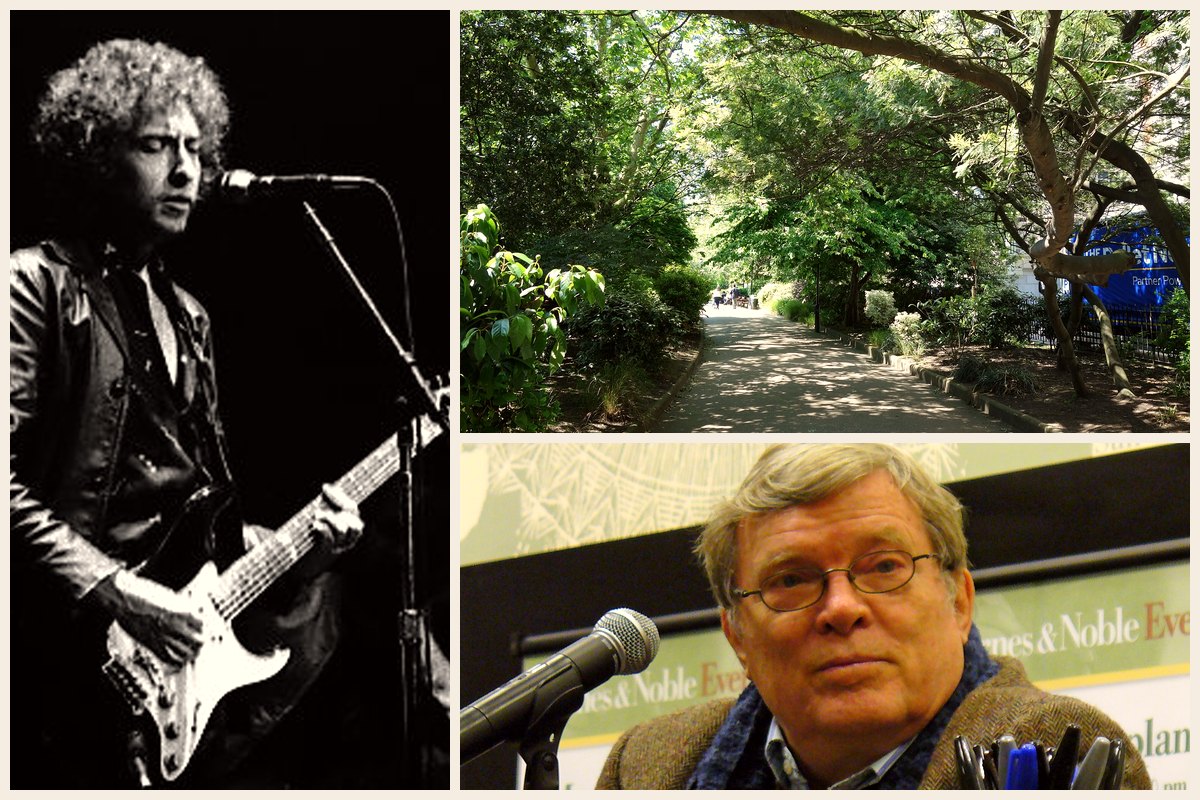
In the spring of 1965, filmmaker D. A. Pennebaker followed Dylan on his tour of England with a handheld 16mm camera, shooting in black and white with live sound. The tour ran from Dylan’s arrival on April 26 to his final concert at the Royal Albert Hall on May 10. The footage became Dont Look Back, one of the first great rock documentaries.
Who Wrote the Cards?
The cue-card idea was Dylan’s own. The cards were lettered by Dylan, his friend Bob Neuwirth, the poet Allen Ginsberg and the young Scottish folk singer Donovan. They are full of deliberate jokes and misspellings. Listen for the line about “eleven dollar bills” and watch the card, which says “20 dollar bills” instead.
Where It Was Filmed
The famous version was shot in a small alley beside the Savoy Hotel, just off the Strand. Today it is known as the Savoy Steps, and the hotel’s exterior looks much as it did in 1965. Ginsberg stands in the background the whole time, deep in conversation with Neuwirth, and at the end the two of them wander out of the frame.
Two other versions were shot as well: one in Victoria Embankment Gardens, right next to the hotel, where the group was joined by Dylan’s producer Tom Wilson, and one on a rooftop. You can see bits of them in Martin Scorsese’s documentary No Direction Home. Dylan’s official channel also carries an “alternate official video.”
The End Became the Beginning
Here is a detail that surprises many fans. According to Pennebaker, the cue-card scene was actually filmed at the very end of the shoot. During editing he moved it to the front, as a kind of stage for Dylan to step onto. The film opened in San Francisco on May 17, 1967, without an apostrophe in its title, which Pennebaker said came from the baseball great Satchel Paige: “Don’t look back. Something might be gaining on you.”
Why It Still Matters
In 1965 there was no MTV and no such thing as a “music video.” Bands made the occasional promotional film, much like the Beach Boys did a year later for “Good Vibrations”, but nothing looked like this. Rolling Stone ranked it No. 7 on its 1993 list of the 100 top music videos, and in 1998 Dont Look Back was added to the National Film Registry.
The imitations never stopped. INXS borrowed the idea for “Mediate” in 1987. “Weird Al” Yankovic dressed as Dylan for his palindrome song “Bob” in 2003. Tim Robbins parodied it in the 1992 film Bob Roberts, and Google used the clip in 2010 to launch its Google Instant search. One journalist called it “the most copied, most revered, music video of all time.”
The words lived on, too. The line about not needing a weatherman to know which way the wind blows gave the radical group the Weather Underground its name, and a 2007 study found it was the Dylan lyric most often quoted by judges and lawyers.
What Happened Next
A few months later Dylan released “Like a Rolling Stone,” which reached No. 2, and on July 25, 1965, he played an electric set at the Newport Folk Festival that shocked the folk crowd. When he entered the Rock and Roll Hall of Fame in 1988, Bruce Springsteen said that “Bob freed your mind the way Elvis freed your body.” In 2016 Dylan received the Nobel Prize in Literature, and in 2024 his early years became the Oscar-nominated film A Complete Unknown.
Listening and Watching Guide
- The album: Bringing It All Back Home (1965), electric on side one and mostly acoustic on side two, with “Mr. Tambourine Man” and “It’s All Over Now, Baby Blue.”
- The film: Dont Look Back (1967), restored in 4K by the Criterion Collection in 2015.
- A rarity: the acoustic take recorded the day before the single, on The Bootleg Series Volumes 1-3.
- Play next: “Like a Rolling Stone,” “Positively 4th Street” and the album Highway 61 Revisited (1965).
- More from the era: explore our 60s Classics and Rock collections.
Fun Facts About the Cue-Card Film
- Allen Ginsberg is in the background for the entire clip, and he helped write some of the cards.
- The original clip ended with a superimposed message used as a trailer for Dont Look Back.
- John Lennon reportedly found the song so captivating that he wondered how he could ever write something to compete with it.
- Kurt Cobain once called Dont Look Back the only good documentary about rock and roll.
- The Savoy’s exterior has changed little since 1965, so you can still stand in the alley where Dylan dropped his cards.
“Subterranean Homesick Blues” Quick Facts
| Artist | Bob Dylan |
| Recorded | January 14, 1965, New York |
| Single released | March 8, 1965 (Columbia Records) |
| Billboard Hot 100 | No. 39, his first U.S. Top 40 hit |
| Album | Bringing It All Back Home (1965) |
| Film director | D. A. Pennebaker |
| Filming location | Savoy Steps, beside the Savoy Hotel, London |
| Cue cards by | Bob Dylan, Bob Neuwirth, Allen Ginsberg and Donovan |
| Documentary | Dont Look Back (premiered May 17, 1967) |
| Honors | National Film Registry, 1998 (for the documentary) |
Sources
- “Subterranean Homesick Blues” on Wikipedia (with its cited sources, including Rolling Stone and Andy Gill)
- Dont Look Back on Wikipedia
- Bringing It All Back Home on Wikipedia
- Bob Dylan on Wikipedia
- Nobel Prize: Bob Dylan, Literature 2016
Photo Credits
- Featured image: Bob Dylan at the March on Washington, August 28, 1963 by Rowland Scherman (National Archives), public domain, via Wikimedia Commons
- Featured image: Bob Dylan and Allen Ginsberg, 1975 by Elsa Dorfman, CC BY 2.5, via Wikimedia Commons
- Featured image: The Savoy Hotel seen from Victoria Embankment Gardens, 2017 by Camerawalker, CC BY-SA 3.0, via Wikimedia Commons
- Featured image: The Savoy Steps alley, London, 2011 by It’s No Game, CC BY 2.0, via Wikimedia Commons
- In-article image: Bob Dylan at Massey Hall, Toronto, April 18, 1980 by Jean-Luc Ourlin, CC BY-SA 2.0, via Wikimedia Commons
- In-article image: Victoria Embankment Gardens, London, 2024 by Daderot, CC0, via Wikimedia Commons
- In-article image: D. A. Pennebaker, 2007 by David Shankbone, CC BY 2.5, via Wikimedia Commons