Sixty-five years ago this week, on the Billboard Hot 100 dated October 23, 1961, a 22-year-old singer from the Bronx reached No. 1 for the first time. The singer was Dion, and the song was “Runaround Sue,” a handclapping, doo-wop-flavored warning about a girl who “goes out with other guys.” It knocked Ray Charles’ “Hit the Road Jack” off the top and stayed there for two weeks.
In this On This Day feature, we go back to the street corners of the Bronx where Dion learned to sing, the party where the song was born, and the session at Bell Sound Studios in New York that turned a fading teen idol into one of the biggest names in rock and roll. The official recording is waiting for you at the end of the article.
▶️ Want to hear those famous “hey, hey, um-dee-dum-dum” harmonies right now? Scroll down. The official “Runaround Sue” recording is at the end of the article.
A Kid From Belmont
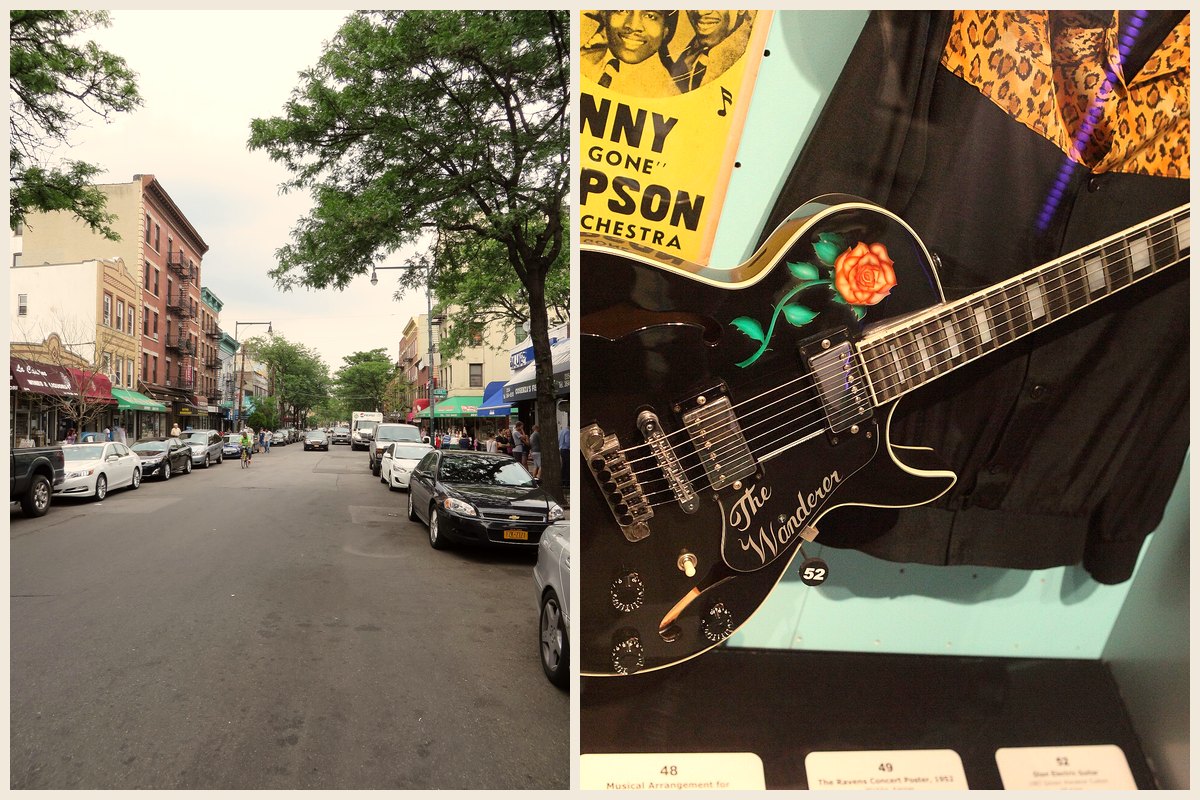
Dion Francis DiMucci was born on July 18, 1939, to an Italian American family in the Bronx, New York, and grew up in the Belmont neighborhood. His first name was chosen in honor of the Dionne quintuplets. As a child he went on tour with his father, Pasquale, a vaudeville entertainer, and he fell in love with country music, especially the songs of Hank Williams. He also soaked up the blues and doo-wop he heard in local bars and on the radio.
His real training ground was the street corner. In the Bronx, Dion and other neighborhood singers built a cappella riffs together, and that is where his smooth, confident voice was shaped. His uncle gave him a guitar when he was 12. His teenage years also had a dark side: by his own account he was already using heroin at 14, a struggle that followed him well into the 1960s.
Dion and the Belmonts
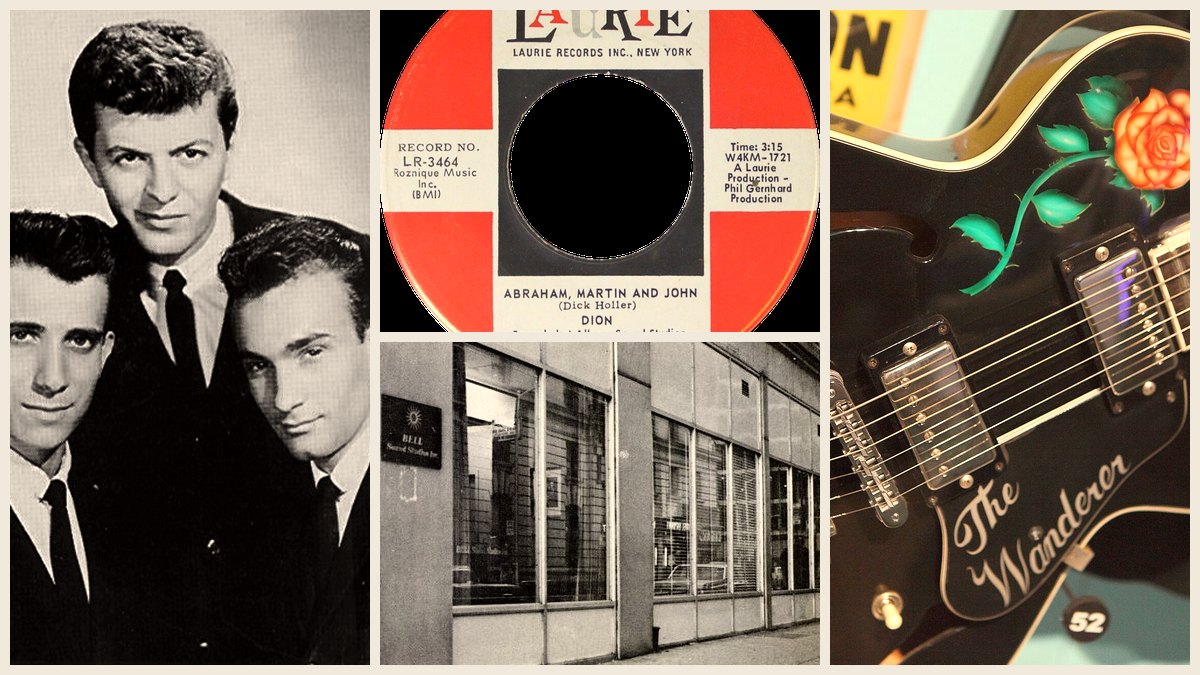
In 1957, Dion recorded “The Chosen Few” for brothers Bob and Gene Schwartz, with a backing group he had never met. Unhappy with their sound, he went back to his neighborhood and recruited three friends, Carlo Mastrangelo, Fred Milano and Angelo D’Aleo. They named themselves after Belmont, and as Dion and the Belmonts they gave Laurie Records its very first release, “I Wonder Why,” which reached No. 22 in 1958.
Hits like “No One Knows” earned the group a place on the 1959 Winter Dance Party tour with Buddy Holly, Ritchie Valens and the Big Bopper. On February 3, 1959, Holly chartered a plane to the next show, and Dion was invited to come along. He turned the seat down because it cost $36, the same amount his parents paid each month in rent, and he could not justify it. The plane crashed that night, killing everyone on board.
Going Solo, and Nearly Fading Away
By the end of 1960, Dion had split from the Belmonts and made his first solo album for Laurie, Alone with Dion, released in 1961. The single “Lonely Teenager” climbed to No. 12, and his records now carried just one name: Dion. But the follow-ups “Havin’ Fun” and “Kissin’ Game” did less well, and it looked as if he might drift onto the cabaret circuit.
What he needed was a song that sounded like the street corners he came from. It started at an informal birthday party for a friend. Dion began making up lyrics on the spot and got everyone to add doo-wop harmonies to a clapping rhythm. In his autobiography, The Wanderer, he said the idea was inspired by Gary U.S. Bonds’ “Quarter to Three,” which had just been released. (That record had itself topped the Hot 100 earlier in 1961.)
Writing It With Ernie Maresca
Dion took the idea to his friend Ernie Maresca, a fellow Bronx native and a budding songwriter who had already written “No One Knows” for Dion and the Belmonts. Together they shaped the tune and the words. The lyrics warn every potential boyfriend to “keep away from Runaround Sue,” a girl who runs around with every guy she meets.
So who was Sue? Dion has told the story more than one way. In The Wanderer he wrote that the song had nothing to do with his wife, Susan, and elsewhere he said the name belonged to a girl he had admired from a distance, adding that “her name fit the lyric line perfectly.” Yet in a 1990 interview with his wife on The Oprah Winfrey Show, the couple said the song was indeed about her. We will let you decide.
The Session at Bell Sound
Without the Belmonts, Dion found a new vocal group, the Del-Satins, and rehearsed the song with them. Laurie Records co-owner Gene Schwartz liked what he heard, and “Runaround Sue” was recorded in the summer of 1961 at Bell Sound Studios in New York City.
The backing band was full of top New York session players: Teacho Wiltshire on piano, Buddy Lucas on saxophone, Mickey Baker on guitar, Bucky Pizzarelli on rhythm guitar, Milt Hinton on bass and Panama Francis on drums. The result was rock and roll in a modified doo-wop style, with Dion’s lead riding on top of the Del-Satins’ chanting harmonies.
Two Weeks at No. 1
The record “stormed up the U.S. charts,” as one account puts it. On the Hot 100 dated October 23, 1961, “Runaround Sue” replaced “Hit the Road Jack” at No. 1. It held the top spot for two weeks before Jimmy Dean’s “Big Bad John” took over on November 6. It also reached No. 4 on the R&B chart and No. 11 in the UK, where Dion toured, and it sold more than a million copies, earning a gold disc. Dion was one of several acts, along with Joe Dowell, the Highwaymen and Bobby Vee, who topped the chart for the first time between August and October 1961.
The Wanderer Follows
For the next single, Laurie promoted the A-side, “The Majestic.” But radio preferred the B-side, Maresca’s “The Wanderer,” which climbed to No. 2 in February 1962. By the end of 1961 Dion had become a major star, touring worldwide and appearing in the musical film Twist Around the Clock. In 1962 he added “Lovers Who Wander” (No. 3), “Little Diane” (No. 8) and “Love Came to Me” (No. 10), before moving to Columbia Records, where he was the first rock and roll artist the label signed.
It was a golden moment for early-’60s pop. A year later, the novelty hit “Monster Mash” would rule the same chart, and pioneers like Chuck Berry were still on the road. Dion, though, had something special: a street-corner sound that never really went out of style.
Still Running Around
Dion kept reinventing himself, from the blues to the 1968 hit “Abraham, Martin and John” to award-winning gospel and, much later, a string of chart-topping blues albums. He was inducted into the Rock and Roll Hall of Fame in 1989, and in 2002 “Runaround Sue” entered the Grammy Hall of Fame. Rolling Stone ranked it No. 351 on its 2004 list of “The 500 Greatest Songs of All Time.”
The song has had many lives of its own. Leif Garrett, who was born during the original’s chart run in the fall of 1961, took his cover to No. 13 in early 1978. The English group Racey reached No. 13 in the UK with their version in 1980, and John Cafferty and the Beaver Brown Band recorded it for the 1983 film Eddie and the Cruisers. As recently as August 14, 2021, Dion’s original reached No. 35 on Billboard’s Digital Song Sales chart.
Listening Tips
- Listen to the backing vocals. The Del-Satins carry the rhythm of the song, a sound that grew out of a birthday party where everyone sang along to a clapping beat.
- Follow the band. Under the voices, listen for Buddy Lucas’ saxophone and Milt Hinton’s bass, two of New York’s busiest session players of the era.
- Play the B-side story. Follow it with “The Wanderer,” the Maresca song that became an even bigger hit than its A-side.
- Compare the inspiration. Listen to Gary U.S. Bonds’ “Quarter to Three,” which Dion named as the spark for the song.
- Explore the decade. Browse more 60s Classics and Rock stories.
“Runaround Sue” Quick Facts
| Artist | Dion (with the Del-Satins) |
| Written by | Dion DiMucci and Ernie Maresca |
| Label | Laurie Records |
| Recorded | Summer 1961, Bell Sound Studios, New York City |
| Hot 100 No. 1 | Chart dated October 23, 1961 (two weeks) |
| Before and after | Followed “Hit the Road Jack” by Ray Charles; replaced by “Big Bad John” by Jimmy Dean |
| Other peaks | No. 4 on the R&B chart; No. 11 in the UK |
| Sales | More than one million copies (gold disc) |
| Honors | Grammy Hall of Fame (2002); No. 351 on Rolling Stone’s 500 Greatest Songs (2004) |
Sources
- “Runaround Sue” on Wikipedia (with its cited sources, including Billboard)
- Dion DiMucci on Wikipedia
- Ernie Maresca on Wikipedia
- List of Billboard Hot 100 number ones of 1961 on Wikipedia
- Billboard Hot 100, October 23, 1961
Photo Credits
- Featured image: Dion and the Belmonts, Hit Parader, September 1960 by Charlton Publications, public domain, via Wikimedia Commons
- Featured image: Laurie Records label for Dion’s “Abraham, Martin and John” (1968) by Laurie Records, public domain, via Wikimedia Commons
- Featured image: Bell Sound Studios on 54th Street, New York (Billboard, 1968) by an anonymous photographer for Billboard, public domain, via Wikimedia Commons
- Featured image: Dion’s 1987 Gibson Wanderer Custom guitar (detail) by Sam Howzit, CC BY 2.0, via Wikimedia Commons
- In-article image: Arthur Avenue in the Bronx by Leonard J. DeFrancisci, CC BY-SA 3.0, via Wikimedia Commons
- In-article image: Dion’s 1987 Gibson Wanderer Custom guitar at the Rock and Roll Hall of Fame by Sam Howzit, CC BY 2.0, via Wikimedia Commons