On the Billboard Hot 100 dated October 24, 1987, Michael Jackson reached No. 1 with “Bad.” It took over from Lisa Lisa and Cult Jam’s “Lost in Emotion,” stayed on top for two weeks and became Jackson’s eighth No. 1 single. It was also the second chart-topper from the album Bad, which would go on to set a record no album had reached before: five No. 1 singles.
In this On This Day feature, we look at the pressure of following Thriller, the duet with Prince that never happened, the true story that inspired the lyrics, and the 18-minute Martin Scorsese short film shot in a Brooklyn subway station. The official video is waiting for you at the end of the article.
▶️ Want to see the subway dance and the black buckled outfit right now? Scroll down. The official “Bad” video is at the end of the article.
How Do You Follow Thriller?
Jackson released Thriller on November 29, 1982. By the end of 1983 it was the best-selling album of all time, with 32 million copies sold, and videos such as “Billie Jean” had broken down barriers on MTV. Everyone wanted to know what would come next. Newsweek later compared the challenge to “following up the Bible,” and Jackson set himself an enormous target: he wanted his next album to sell 100 million copies.
He began recording ideas in 1983, but the work was interrupted by the Victory Tour with his brothers in 1984, by “We Are the World” in early 1985 and by the Disney 3D film Captain EO. Producer Quincy Jones, working with Jackson for the third and final time, encouraged him to write more of his own material and to make “a very honest album.” Jackson reportedly wrote around sixty songs and recorded thirty-three, and he wrote nine of the eleven tracks that made the final album.
The Duet That Never Happened
Jackson wrote and recorded “Bad” in 1986 and co-produced it with Jones. He planned to sing it as a duet with Prince, but Prince declined. He later explained that the very first line of the song is “your butt is mine,” and asked, “Who’s going to sing that to who? … because you sure aren’t singing that to me, and I sure ain’t singing it to you.” Prince offered his own song, “Wouldn’t You Love to Love Me,” instead, but Jackson turned it down.
A Song About the Street
In his 1988 autobiography Moonwalk, Jackson described “Bad” as “a song about the street.” It tells of a kid from a rough neighborhood who goes away to a private school, then comes home on a break and gets trouble from the kids he left behind. “He’s saying when you’re strong and good, then you’re bad,” Jackson wrote. In a 1988 interview with Ebony and Jet, he said he was inspired by a true story he had read in Time or Newsweek about a student from upstate New York who was killed by jealous friends. Biographers have linked it to the case of Edmund Perry, although the real events were different from the version Jackson remembered.
Musically, the track is in A minor at about 114 beats per minute, with a bassline built on the A blues scale. Its four-note brass introduction openly references James Brown’s “It’s a Man’s Man’s Man’s World,” and critics heard echoes of the “Hit the Road Jack” chord progression. Jimmy Smith played MIDI organ, John Robinson played drums, and Jerry Hey arranged the horns, with Bruce Swedien handling recording and mixing.
Scorsese, Snipes and a Subway Station
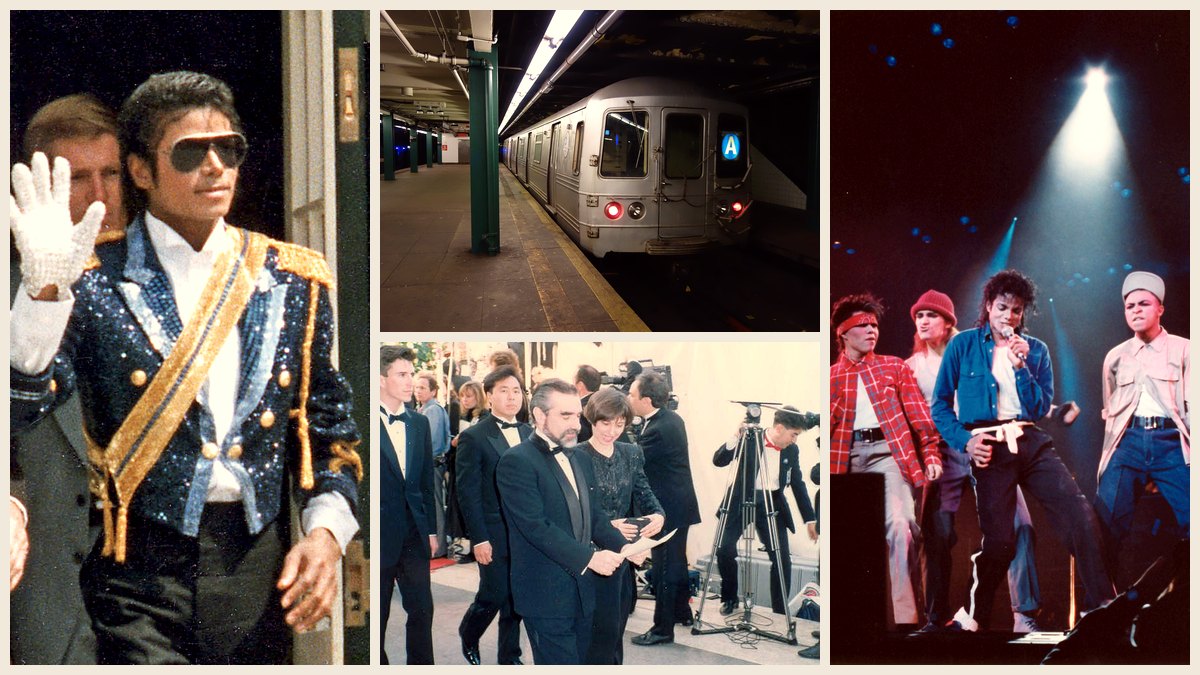
The full video for “Bad” is an 18-minute short film directed by Martin Scorsese, written by the novelist and screenwriter Richard Price and shot by cinematographer Michael Chapman. It was filmed in Brooklyn over six weeks in November and December 1986, and it premiered on August 31, 1987, the day the album came out, at the end of the CBS prime-time special Michael Jackson: The Magic Returns.
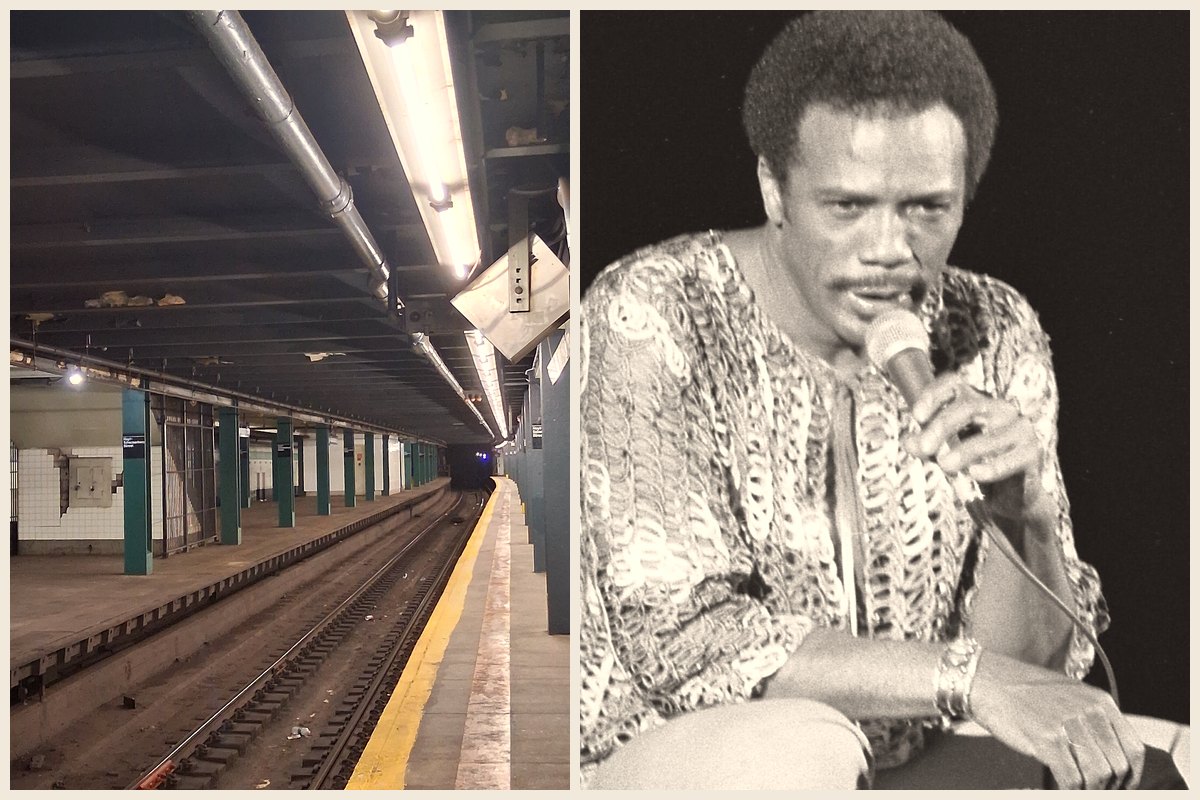
Jackson plays Darryl, a teenager who has just finished a term at an expensive private school and returns by subway to his old neighborhood. His old friends, led by “Mini Max,” played by a then mostly unknown Wesley Snipes, push him to prove he is still “bad.” Darryl almost robs an elderly man in the Hoyt–Schermerhorn Streets station, changes his mind at the last minute, and the film bursts into the famous dance sequence as he sings the song. In the end, Max accepts that Darryl has moved on, and the two part with a handshake.
The Choreography
Jackson created the dance routines with Jeffrey Daniel and Gregg Burge, drawing on the “Cool” sequence from West Side Story but adding modern touches, including the moonwalk. “It’s like a train coming across the screen,” Daniel said. The video was nominated for Best Choreography at the 1988 MTV Video Music Awards, but the award went to his sister Janet Jackson for “The Pleasure Principle.” The video used a different mix of the song from the single, with a different organ solo, which has never been released commercially.
Two Weeks at No. 1
Epic Records released “Bad” as the album’s second single on September 7, 1987, after the Siedah Garrett duet “I Just Can’t Stop Loving You.” It entered the top ten of the Hot 100 at No. 8 on October 10 and reached No. 1 on October 24, staying there for two weeks before Tiffany’s “I Think We’re Alone Now” took over. It also topped the Cash Box Top 100, the Hot R&B Singles chart and the Hot Dance Club Play chart, and it reached No. 1 in Ireland, Norway, Spain and the Netherlands and No. 3 in the UK.
Critics noted that the song gave Jackson a tougher, edgier image. AllMusic’s Stephen Thomas Erlewine wrote that Jackson “sounded like the love child of James Brown and Mavis Staples” and concluded that “‘Bad’ is very good.” The song won Favorite Soul/R&B Single at the American Music Awards, and at the 1988 Grammys it was nominated for Best R&B Vocal Performance, Male.
A Record-Breaking Album
Bad spent six weeks at No. 1 on the Billboard album chart and produced five Hot 100 No. 1s: “I Just Can’t Stop Loving You,” “Bad,” “The Way You Make Me Feel,” “Man in the Mirror” and “Dirty Diana.” Billboard honored Jackson with its first Spotlight Award for being the first artist to score five No. 1 singles from one album. The album has sold more than 35 million copies worldwide, and the Bad tour, his first solo world tour, played 123 concerts in 15 countries to 4.4 million people and grossed $125 million.
The video lived on, too. “Weird Al” Yankovic filmed his 1988 parody, “Fat,” on the same subway set with Jackson’s permission, and in 2018 the jacket Jackson wore in the video sold for $298,000 at a New York auction. After Jackson’s death in 2009, a New York City Council member asked the MTA to rename the station or add a plaque in his honor, but the request was turned down because of the agency’s rules.
Listening Tips
- Catch the James Brown nod. The four-note brass opening references “It’s a Man’s Man’s Man’s World.”
- Follow the bass. The main bassline is built on the A blues scale and drives the whole song.
- Compare the versions. The video mix has a different organ solo from the single, so listen to both.
- Watch the full short film. The 18-minute version shows the story by Richard Price before the dance begins.
- Explore the decade. Browse more 80s Hits and Soul & R&B stories.
“Bad” Quick Facts
| Artist | Michael Jackson |
| Written by | Michael Jackson |
| Producers | Michael Jackson and Quincy Jones |
| Album | Bad (Epic Records, August 31, 1987) |
| Single release | September 7, 1987 |
| Hot 100 No. 1 | Chart dated October 24, 1987 (two weeks) |
| Before and after | Followed “Lost in Emotion” by Lisa Lisa and Cult Jam; replaced by “I Think We’re Alone Now” by Tiffany |
| Other No. 1s | Hot R&B Singles, Hot Dance Club Play, Cash Box; Ireland, Norway, Spain, Netherlands |
| Video | Directed by Martin Scorsese, written by Richard Price, with Wesley Snipes |
Sources
- “Bad” (Michael Jackson song) on Wikipedia (with its cited sources, including Billboard and Rolling Stone)
- Bad (album) on Wikipedia
- List of Billboard Hot 100 number ones of 1987 on Wikipedia
- Billboard Hot 100, October 24, 1987
Photo Credits
- Featured image: Michael Jackson at the White House, May 14, 1984 by the White House Photo Office, public domain, via Wikimedia Commons
- Featured image: A train at the Hoyt–Schermerhorn Streets station, 2018 by Tdorante10, CC BY-SA 4.0, via Wikimedia Commons
- Featured image: Martin Scorsese at the 62nd Academy Awards, 1990 by Alan Light, CC BY 2.0, via Wikimedia Commons
- Featured image: Michael Jackson performing “The Way You Make Me Feel,” 1988 by Drew H. Cohen, CC BY-SA 3.0, via Wikimedia Commons
- In-article image: The Hoyt–Schermerhorn Streets station in Downtown Brooklyn by Kidfly182, CC BY 4.0, via Wikimedia Commons
- In-article image: Quincy Jones at the Greek Theatre, Los Angeles, 1975 by Los Angeles Times, CC BY 4.0, via Wikimedia Commons