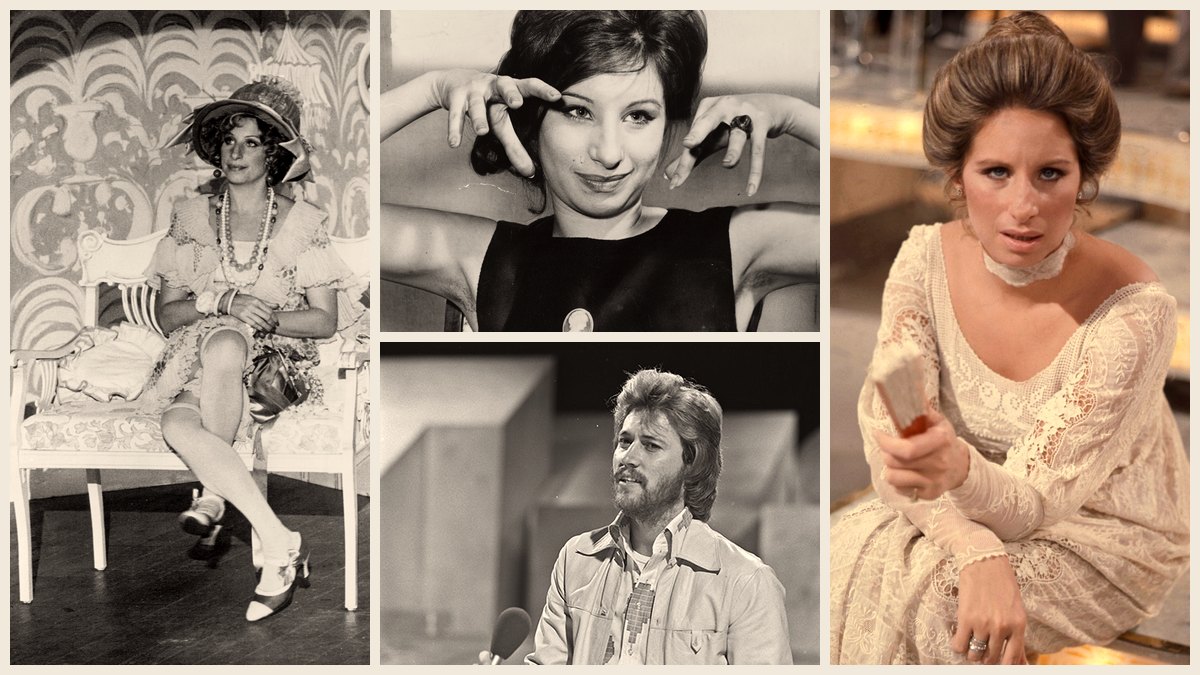
On the Billboard Hot 100 dated October 25, 1980, Barbra Streisand climbed to No. 1 with “Woman in Love.” It replaced Queen’s “Another One Bites the Dust” at the top and held the spot for three weeks. The song was written by Barry and Robin Gibb of the Bee Gees, and it became what is considered Streisand’s greatest international hit.
In this On This Day feature, we look at how one of Broadway and Hollywood’s biggest stars teamed up with the Bee Gees’ Barry Gibb, famous for his falsetto, how a half-album plan turned into a full album called Guilty, and why the song still tops lists of Streisand’s best. The official recording is waiting for you at the end of the article.
▶️ Want to hear that soaring chorus right now? Scroll down. The official “Woman in Love” recording is at the end of the article.
A Star Looking for a New Sound
By 1980 Barbra Streisand had already done almost everything. Born in Brooklyn on April 24, 1942, she started out in nightclubs and on Broadway in the early 1960s, and her debut, The Barbra Streisand Album (1963), won the Grammy for Album of the Year. She played Fanny Brice in Funny Girl on stage and then on film, winning the Academy Award for Best Actress, and she won a second Oscar for writing the love theme from A Star Is Born, “Evergreen,” becoming the first woman honored as a composer.
She was also a regular presence at the top of the singles chart. Before “Woman in Love,” she had reached No. 1 on the Hot 100 four times, with “The Way We Were,” “Evergreen,” “You Don’t Bring Me Flowers” with Neil Diamond and “No More Tears (Enough Is Enough)” with Donna Summer, which as of 2010 was reportedly still the most commercially successful duet ever.
Calling Barry Gibb
The late 1970s belonged to the Bee Gees. After their huge success in the disco years, the brothers were asked to work on projects for other artists, and Streisand asked Barry Gibb to write an album for her. It was the tail end of the disco era, the same years that produced Gloria Gaynor’s “I Will Survive”.
At first Gibb was only going to write or co-write half the album. The process went so well that he ended up doing the whole thing. Every song was written expressly for Streisand except “The Love Inside,” which Gibb had written more than a year earlier. Two songs written for the project, “Secrets” and “Carried Away,” were left off and later recorded by Elaine Paige and Olivia Newton-John.
Gibb produced the album with his group’s regular production team, Albhy Galuten and Karl Richardson. In 1979 he also recorded demo versions of the songs with his own voice, mostly in his famous falsetto, so Streisand could learn them. Those recordings circulated among fans for years before Gibb made them available on iTunes in 2006 as The Guilty Demos.
Inside the Recording
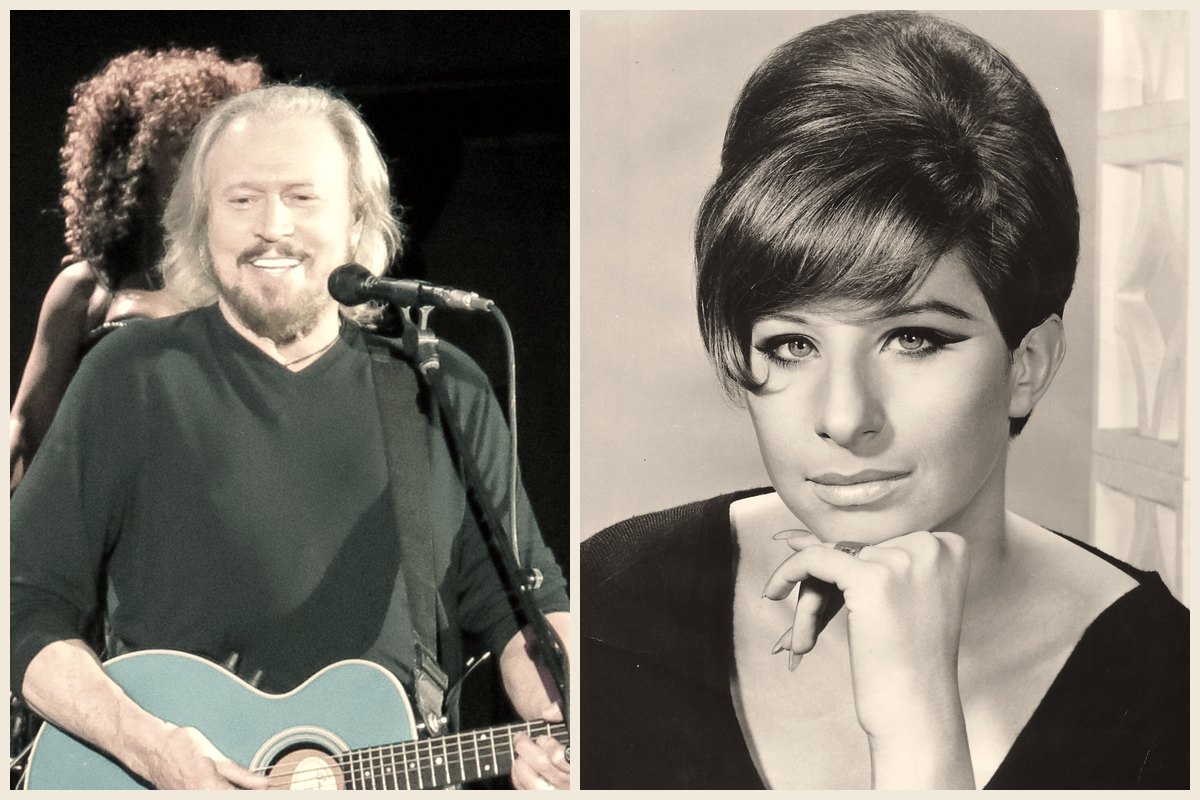
On the record, Streisand sings lead while Gibb plays acoustic guitar and wrote the horn and string arrangements. The band was a team of top session players: Pete Carr on lead guitar, Richard Tee on keyboards and electric piano, Harold Cowart on bass, Steve Gadd on drums and Joe Lala on shaker, with Jerry Peel on French horn and Denise Maynelli, Myrna Mathews and Marti McCal on background vocals.
The songwriters were rewarded, too. Barry and Robin Gibb received the 1980 Ivor Novello Award for Best Song Musically and Lyrically for “Woman in Love.”
Three Weeks at No. 1
“Woman in Love” was released as the lead single from the album in August 1980, and Columbia Records released Guilty on September 23, 1980. On the chart dated October 25, the single reached No. 1 on the Hot 100, where it stayed for three weeks before Kenny Rogers’ “Lady” took over. It also spent five weeks at No. 1 on the Adult Contemporary chart, her sixth No. 1 on that list.
It was Streisand’s fifth No. 1 on the Hot 100, and as of 2026 still her last. The song was even bigger abroad. It reached No. 1 in the UK, Canada, Ireland, the Netherlands, Norway, Sweden, Switzerland, Austria, Flanders and West Germany, and No. 2 in New Zealand. According to Billboard, it sold more than 2.5 million copies by December 1981, and it became the fourth of her four platinum singles.
The Video
The music video did not need a new film shoot. It used clips from A Star Is Born, in which Streisand starred with Kris Kristofferson, and from other films she made in the 1970s, a fitting reminder that the voice on the radio belonged to one of Hollywood’s biggest names.
Guilty and Beyond
Guilty became Streisand’s best-selling album internationally, with sales of 15 million copies worldwide. Two duets with Gibb followed “Woman in Love” into the top ten: the title track, which peaked at No. 3 and won the Grammy Award for Best Pop Performance by a Duo or Group with Vocal, and “What Kind of Fool,” which reached No. 10. A fourth single, the disco-flavored “Promises,” was a bigger hit on adult contemporary radio than on the Hot 100.
Critics were divided in an entertaining way. AllMusic’s William Ruhlmann called it one of the singer’s “least characteristic” albums and said it “sounds like a post-Saturday Night Fever Bee Gees album with vocals by Streisand.” Robert Christgau gave it a C+ and complained that “most of the time she oversings.” Rolling Stone’s Stephen Holden enjoyed it, calling it “as beautifully crafted a piece of ear candy as I’ve heard in years.”
Barry Gibb kept writing and producing hits for other singers, including albums for Dionne Warwick, Kenny Rogers and Diana Ross. His song “Islands in the Stream” became a 1983 No. 1 for Kenny Rogers and Dolly Parton. In 2005 he and Streisand reunited for a sequel, Guilty Pleasures, and the original album was reissued for its 25th anniversary.
A Lasting Favorite
“Woman in Love” has never really gone away. In 2006 the Atomic Kitten singer Liz McClarnon released a cover produced by Robin Gibb, which reached No. 5 in the UK as a double A-side. In 2023, American Songwriter ranked “Woman in Love” as the No. 1 greatest Barbra Streisand song, and The Guardian placed it at No. 7. Like Phil Collins’ “A Groovy Kind of Love” eight years later, it showed that a gentle ballad could still go all the way to No. 1.
Listening Tips
- Follow the build. Notice how the arrangement starts small and grows into the big chorus, with Gibb’s strings and horns rising behind Streisand.
- Compare the demo. Barry Gibb’s falsetto version on The Guilty Demos shows how the song sounded before Streisand made it her own.
- Listen for the session stars. Steve Gadd’s drums and Richard Tee’s electric piano give the ballad a smooth, solid groove.
- Play the whole album. Follow “Woman in Love” with the duets “Guilty” and “What Kind of Fool” to hear the full Streisand–Gibb partnership.
- Explore the decade. Browse more 80s Hits and Pop stories.
“Woman in Love” Quick Facts
| Artist | Barbra Streisand |
| Written by | Barry Gibb and Robin Gibb |
| Producers | Barry Gibb, Albhy Galuten and Karl Richardson |
| Album | Guilty (Columbia Records, September 23, 1980) |
| Single release | August 1980 |
| Hot 100 No. 1 | Chart dated October 25, 1980 (three weeks) |
| Before and after | Followed “Another One Bites the Dust” by Queen; replaced by “Lady” by Kenny Rogers |
| Other No. 1s | UK, Canada, Ireland, Netherlands, Norway, Sweden, Switzerland, Austria, West Germany; five weeks No. 1 Adult Contemporary |
| Award | Ivor Novello Award, Best Song Musically and Lyrically (1980) |
Sources
- “Woman in Love” on Wikipedia (with its cited sources, including Billboard)
- Guilty (Barbra Streisand album) on Wikipedia
- “Guilty” (Barbra Streisand and Barry Gibb song) on Wikipedia
- Barbra Streisand on Wikipedia
- Barry Gibb on Wikipedia
- List of Billboard Hot 100 number ones of 1980 on Wikipedia
- Billboard Hot 100, October 25, 1980
Photo Credits
- Featured image: Barbra Streisand in the 1975 TV special Funny Girl to Funny Lady by Sentry Collection, public domain, via Wikimedia Commons
- Featured image: Barbra Streisand, 1962 by Al Ravenna, World Telegram staff photographer, public domain, via Wikimedia Commons
- Featured image: Barry Gibb on the Dutch TV show TopPop, 1973 by AVRO, CC BY-SA 3.0 nl, via Wikimedia Commons
- Featured image: Barbra Streisand portrait by Allan Warren, CC BY-SA 3.0, via Wikimedia Commons
- In-article image: Barry Gibb at the Hollywood Bowl, 2014 by Louise Palanker, CC BY-SA 2.0, via Wikimedia Commons
- In-article image: Promotional photo of Barbra Streisand by an unknown photographer, public domain, via Wikimedia Commons