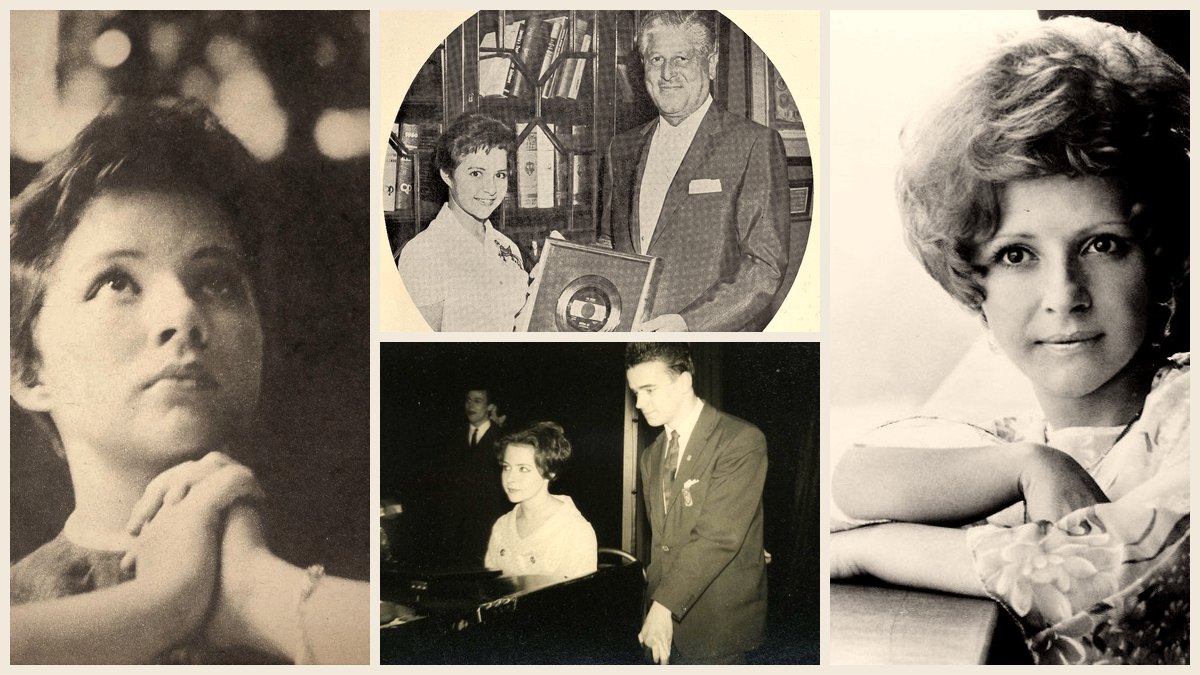
On the Billboard Hot 100 dated October 24, 1960, a 15-year-old girl from Georgia knocked the Drifters’ “Save the Last Dance for Me” off the top of the chart. Brenda Lee’s “I Want to Be Wanted” spent only one week at No. 1, but it was her second chart-topper of that summer and fall, and it would remain her last for an astonishing 63 years.
In this On This Day feature, we follow the song from a little-noticed entry at Italy’s Sanremo festival to a Nashville studio, meet the tiny singer they called “Little Miss Dynamite,” and explain how a Christmas record finally broke her long wait. The official recording is waiting for you at the end of the article.
▶️ Want to hear that big, grown-up voice right now? Scroll down. The official “I Want to Be Wanted” recording is at the end of the article.
From Sanremo to Nashville
“I Want to Be Wanted” began life as an Italian song, “Per tutta la vita” (“For all lifetime”), written by Pino Spotti and Alberto Testa. In 1959 it was one of the 20 songs performed at the Festival di Sanremo, Italy’s annual song contest, where every entry was sung by two different singers. Wilma De Angelis and Jula de Palma performed “Per tutta la vita,” and the performances were aired live on Italian radio and television from January 29 to 31. The song did not finish among the festival’s top ten.
That might have been the end of the story. Instead, the American lyricist Kim Gannon wrote English words for the melody, and Lee’s producer, Owen Bradley, picked it up for her. Brenda Lee’s English version was even issued in Italy, on the Fonit label.
A Child Star From Georgia
Brenda Lee was born Brenda Mae Tarpley on December 11, 1944, at Emory University Hospital in Atlanta. Her family was poor, moving between rented three-room houses around the Atlanta area, and she started singing very young: she won her first talent contest at age five with “Take Me Out to the Ball Game.” In 1953 her father died after an accident on a construction site, and the family was left penniless. Her singing gigs helped to support them, and a local television producer suggested a shorter, easier stage name. She became Brenda Lee.
Her big break came in February 1955 in Augusta, Georgia, when the country star Red Foley agreed to hear her sing before his show and let her perform “Jambalaya (On the Bayou)” on stage that night. Foley made her a regular on his ABC-TV program Ozark Jubilee, and in May 1956 she signed with Decca Records. She was 11 years old, though her first single was billed as “Little Brenda Lee (9 Years Old).”
Appearances on The Perry Como Show, The Steve Allen Show and The Ed Sullivan Show followed. Her 1957 single “Dynamite” gave her a nickname that stuck for life, “Little Miss Dynamite,” and she toured on rock and roll package shows with Ricky Nelson, Bill Haley & His Comets and Patsy Cline, who became a good friend. In 1958 Owen Bradley took over as her producer, a partnership that would last ten years.
The Summer of “I’m Sorry”
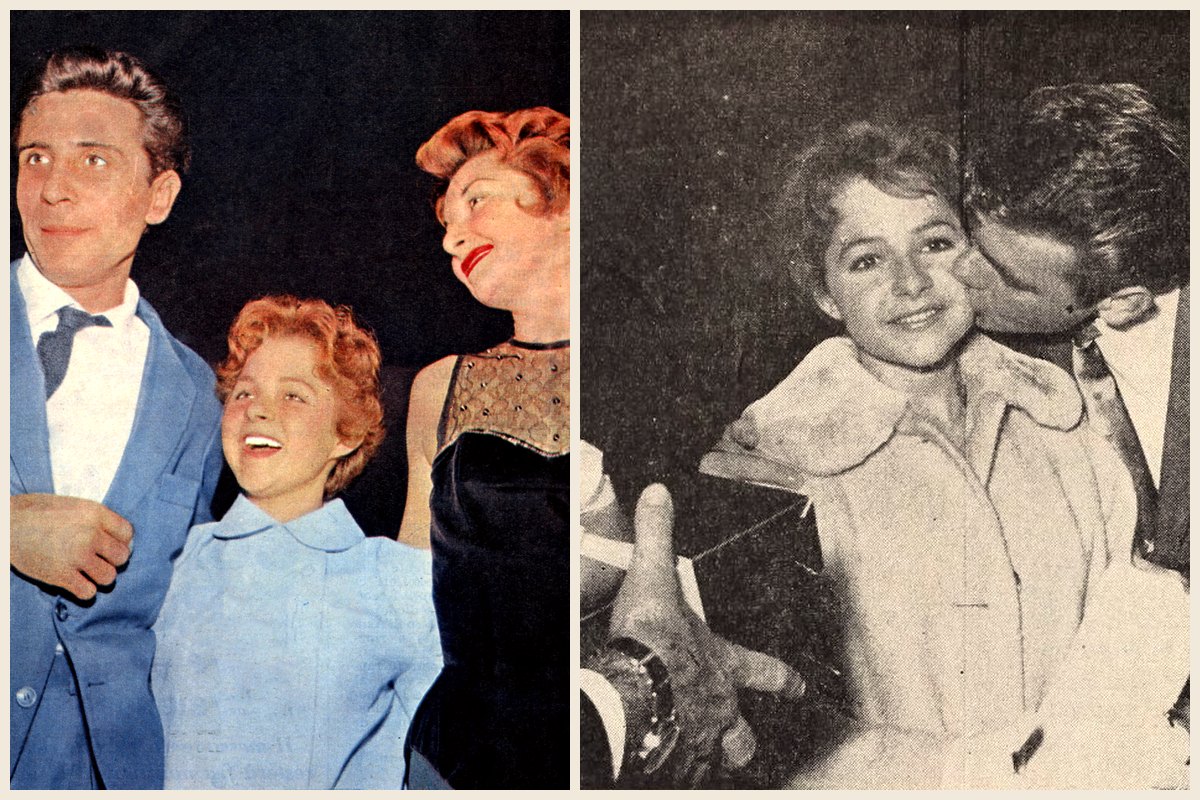
Lee’s manager, Dub Albritten, believed rock and roll was a “fad” and began steering her toward pop. In 1959 he took her to France, where her records were selling, and billed her with the French star Gilbert Bécaud. Back in Nashville that summer she recorded “Sweet Nothin’s,” which became her first top-ten hit in both the US and the UK, peaking at No. 4 in each.
Then came “I’m Sorry.” Written by Albritten and Ronnie Self, it was recorded early in 1960, but Decca held it back for months, worried that a 15-year-old was not mature enough to sing about unrequited love. It finally appeared as the flip side of the upbeat “That’s All You Gotta Do.” The A-side reached No. 6, but “I’m Sorry” became the smash, spending three weeks at No. 1 in July 1960. With the Anita Kerr Singers on backing vocals and lush strings, it became an early example of the “Nashville sound.”
One Week at the Top
Bradley found “Per tutta la vita” as the follow-up, and “I Want to Be Wanted” kept Lee in the same mature, string-laden ballad style. On the chart dated October 24, 1960, it reached No. 1 on the Hot 100, interrupting the Drifters’ run with “Save the Last Dance for Me,” which returned to the top the following week. It was Lee’s second No. 1 single, her second top-ten hit in Australia and her first and only top-ten single on the US R&B chart. In the UK it reached No. 31.
It was a crowded season at the top. A few weeks later, “Georgia on My Mind” reached No. 1, and by the end of November Elvis Presley was there with “Are You Lonesome Tonight?” Exactly one year after Lee’s week at the summit, on October 23, 1961, Dion’s “Runaround Sue” would make the same climb.
A third ballad, “Emotions,” reached the top ten in the US and Belgium in late 1960, and two of her albums, Brenda Lee and This Is…Brenda, both reached the top ten of the Billboard album chart that year. Her ballads appealed to teenagers and adults alike.
A Song That Traveled
Like the singer, the song kept moving. Andy Williams recorded a version as the B-side of his single “Stranger on the Shore,” and Olivia Newton-John covered it on her 1992 album Back to Basics: The Essential Collection 1971–1992.
Little Miss Dynamite Grows Up
Lee was one of pop’s best-selling artists of the early 1960s. Between 1961 and 1963, nine of her ballads made the top ten in the US, UK or Australia, including “Fool No. 1,” “Break It to Me Gently,” “All Alone Am I” and “Losing You.” A 1962 show in Hamburg, Germany, featured the Beatles, and by 1964 she was recording her hits in Spanish, German, Italian and French. Her 1965 single “One Rainy Night in Tokyo,” sung in Japanese, reached the top ten in Japan.
As the hits slowed, Lee reinvented herself as a country artist in the 1970s, starting with “Nobody Wins” in 1973 and continuing with top-ten country singles such as “Big Four Poster Bed,” written by her friend Shel Silverstein. Like Willie Nelson, she proved that Nashville could be home to more than one style. She was inducted into the Country Music Hall of Fame in 1997 and the Rock and Roll Hall of Fame in 2002, and received a Lifetime Achievement Grammy in 2009.
The 63-Year Wait
For decades, “I Want to Be Wanted” stood as Brenda Lee’s last Hot 100 No. 1. That changed thanks to a song she had recorded at 13: “Rockin’ Around the Christmas Tree.” After returning to the Hot 100 every holiday season and peaking at No. 2 from 2019 to 2022, it finally reached No. 1 on the chart dated December 9, 2023, after Lee released a new music video for its 65th anniversary.
At 78, she became the oldest performer ever to top the Hot 100, and the gap between her second and third No. 1 hits, 63 years, set a record for the longest wait between chart-toppers by any artist. In December 2024 the song was named the Official Holiday Song of Tennessee.
Listening Tips
- Listen for the age gap. Lee was 15 when this record topped the chart. Notice how mature and controlled her phrasing sounds.
- Hear the Nashville sound. Owen Bradley wrapped her voice in strings and backing vocals, the style that helped country and pop meet in the 1960s.
- Play it next to “I’m Sorry.” The two 1960 No. 1s show how quickly Lee moved from rock and roll shouter to ballad singer.
- Seek out the Italian original. Comparing “Per tutta la vita” with Kim Gannon’s English lyrics shows how the song crossed the Atlantic.
- Explore the decade. Browse more 60s Classics and Pop stories.
“I Want to Be Wanted” Quick Facts
| Artist | Brenda Lee |
| Original song | “Per tutta la vita” by Pino Spotti and Alberto Testa (Sanremo 1959) |
| English lyrics | Kim Gannon |
| Producer | Owen Bradley |
| Label | Decca Records |
| Hot 100 No. 1 | Chart dated October 24, 1960 (one week) |
| Before and after | Interrupted “Save the Last Dance for Me” by the Drifters, which returned to No. 1 |
| Other peaks | Top ten in Australia and on the US R&B chart; No. 31 in the UK |
| Next Brenda Lee No. 1 | “Rockin’ Around the Christmas Tree,” December 9, 2023 |
Sources
- “I Want to Be Wanted” on Wikipedia
- Brenda Lee on Wikipedia (with its cited sources)
- “I’m Sorry” (Brenda Lee song) on Wikipedia
- Owen Bradley on Wikipedia
- List of Billboard Hot 100 number ones of 1960 on Wikipedia
- Billboard Hot 100, October 24, 1960
Photo Credits
- Featured image: Brenda Lee, 1960 by Dell Publishing (photographer not credited), public domain, via Wikimedia Commons
- Featured image: Brenda Lee on the cover of Cash Box, August 27, 1960 by Decca Records, public domain, via Wikimedia Commons
- Featured image: Brenda Lee at the Sutton Granada, April 8, 1962 by Peter Denton, CC BY-SA 2.0, via Wikimedia Commons
- Featured image: Brenda Lee publicity photo, 1977 by MCA Records/Billy Smith management, public domain, via Wikimedia Commons
- In-article image: Brenda Lee with Gilbert Bécaud at RAI in Milan, 1959 by an unknown photographer, public domain, via Wikimedia Commons
- In-article image: Brenda Lee and Fabian, 1961 by an uncredited photographer, public domain, via Wikimedia Commons